design + energy + excellence

Author: aoife (Page 24 of 28)

Why You Should Check Your Site or House for Geopathic Stress Lines

If you are planning to build a new home or finding your sleep and health disturbed in your current house (or office) you may want to consider having your property checked for Geopathic Stress Lines.

Geopathic Stress is said to be the result of spending long periods working or sleeping above any building or place where the Earth’s natural energy is disturbed by weak electromagnetic fields created by underground streams, certain mineral concentrations, fault lines and cavities.

Some classical symptoms often experienced are related to restless sleep, headaches, insomnia and fatigue.
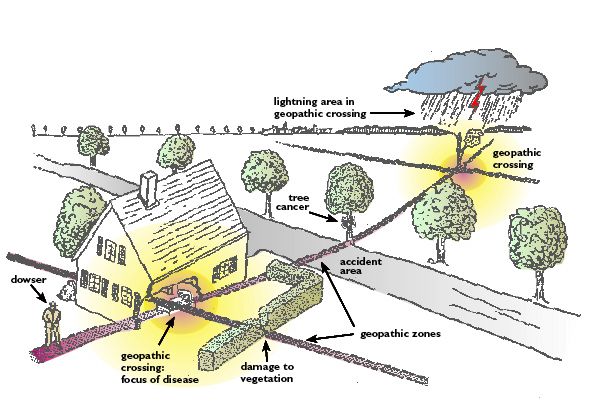
Geopathic Stress Lines

While we are asleep our body should be resting so it can repair body cells, fight infections and absorb nutrients from food. However, it is believed that if we sleep in an area affected by Geopathic Stress, our body has to use all its energy just to keep its vital organs going. As a result our immune system becomes weakened, which means it has difficulty in absorbing nutrients or fighting off infections as efficiently as it should.  Then in the long term the stresses on our bodies will emerge as more serious conditions. Cancer is the most notorious of these, and tumours are known to develop almost always at exactly the spot where two or more GS lines cross a person’s body as they lie asleep in their bed. Other diseases often associated with GS lines are: leukaemia, lymphomas, multiple sclerosis, infertility, miscarriage, cot death, etc.

Read this article for a good insight on Geopathic stress lines with many case studies and examples. Click here.

On the other side, Geopathic Stress has been described as a pseudoscience by those skeptical of the concept. Many argue that it has no basis in legitimate science and that a variety of modern devices cause the same problems. I let you decide what to do but as they say in Portugal : “I don’t believe in witches, but that they exist, they exist ”.

If you need someone with good experience in GS lines in the Wexford area give a look at Brendan Murphy’s website.

There is also a quite interesting discussion with some testimonials here.

For me, as an Architect, it’s important to know about my client’s concerns regarding this issue so I can address them at an early stage when sitting the building on the site or when re-styling their house or office.

View Isabel Barros's LinkedIn profileView Isabel Barros’s profile

Construction Costs in Recession Ireland

I am often asked how much a building is going to cost. The first thing I like to answer is that I am not a builder. I am able to give you a rough estimate but do not go thinking that is the exact right cost because there are a number of factors that will impact on the total cost for your construction project. Starting with the great volatility of the current market and ending with the quality of finishes that you are planning to have.

The reality at the moment is that building materials costs have started to decline in February 2009, they are now approximately 5.5% to 10.5% cheaper than last year (2008). Furthermore, for new house building projects the average decline in tender prices is 13%,although in some cases, falls of over 20% have been witnessed. So, this is probably the best time to build! Don’t think twice just think wise.

To help you with some cost guidance these are some useful references.


From RIAI:

RIAI Cost Guidelines, March 2006

(There is no update to these Guidelines, but due to the downturn in the economy they should be reasonable updated.)


From the Society of Chartered Surveyors:

Tender prices continue dramatic fall with building costs down 17.3% on this time last year

Guide to House Rebuilding Costs 2009


From Build Your Own House & Home Magazine:

Self-Build: Estimating Your Building Costs


From Bruce Shaw Group:

Average Construction Costs 2009

Regional Cost Variations


While you are worried about keeping a tight budget don’t forget that you also have to pay the professionals (like me!) that will make your building possible in a knowledgeable, creative and unique way.

Professional fees are not an extra to your construction costs, they should be part of your construction costs but people often forget this. These may be approx. 11% of the overall construction costs and it will include for architect’s fees, engineer, surveyor, BER assessor, etc.

Check out our other articles in this series.

View Isabel Barros's LinkedIn profileView Isabel Barros’s profile

Architecture and Sustainability: Declaration and Policy of the Architects’ Council of Europe

ACE (Architects’ Council of Europe) declaration on Architecture and Sustainability:

“We, leaders and representatives of the architectural profession believe that the design of the built environment has a profound role to play in ensuring the survival of the human race and thousands of other living species, the integrity of the earth and its biodiversity and the heritage of future generations currently threatened by climate change and unsustainable development.

We are conscious that buildings account for almost half of the primary energy used in the western world, and if we add to that the impact of spatial planning on the movement of people and goods our responsibility as built environment professionals extends even further. Inequitable and unsustainable production and consumption patterns exacerbate environmental changes and aggravate poverty in many regions of the world. Can we find the collective wisdom to choose a more sustainable path of development?”

Read more.

View Isabel Barros's LinkedIn profileView Isabel Barros’s profile



« Older posts Newer posts »