Isabel Barros Architects - Blog

design + energy + excellence

Page 87 of 92

Government Policy on Architecture 2009 – 2015

The new Government Policy on Architecture 2009 – 2015 Towards a Sustainable Future: Delivering Quality within the Built Environment was published on 8 October. Download it here.

The implementation of this Policy on Architecture and its 45 actions is of crucial importance to promote quality in the built environment and to promote awareness, education and sustainability on the role of architecture.

Government Policy on Architecture 2009 – 2015

“The quality of our built environment profoundly affects the quality of our everyday lives.”

“…conceiving, designing and delivering sustainable architecture in our environment presents a significant challenge to this generation. This is a challenge that requires a fundamental re-appraisal of the role of architecture and urban design, integrating their cultural and environmental responsibilities to combat the effects of climate change. In rising to the environmental challenges facing our country there is a need, through research on the built environment, to make informed choices on how we use our existing places, buildings, landscapes and natural resources.”

“…the Government through this Policy on architecture and the built environment seeks to promote awareness and understanding of the contribution of good design to the daily life and well being of society as a whole. High quality design, whether in the details of the buildings we work in, or in the spaces and places that we share socially, should not be viewed as a luxury, achievable on a one-off basis. The realisation of good architecture is fundamentally about much more than individual buildings.”

“The Policy recognises the place of architecture in society as an expression of cultural, aesthetic and social values, both past and present, and the challenges and expectations of the future in shaping a sustainable high quality environment. We can all learn to embrace and indeed love architecture and still preserve the diversity of our own personal tastes and empathies. This will only serve to deepen and enrich the great debate on the places and spaces that lend to shaping our lives.”

John Gormley TD, Minister for the Environment, Heritage and Local Government October, 2009

____________

Read the first Report of the Government Policy on Architecture 2009-2015 published in February 2011.

Design Exposed and the Architect’s Brain

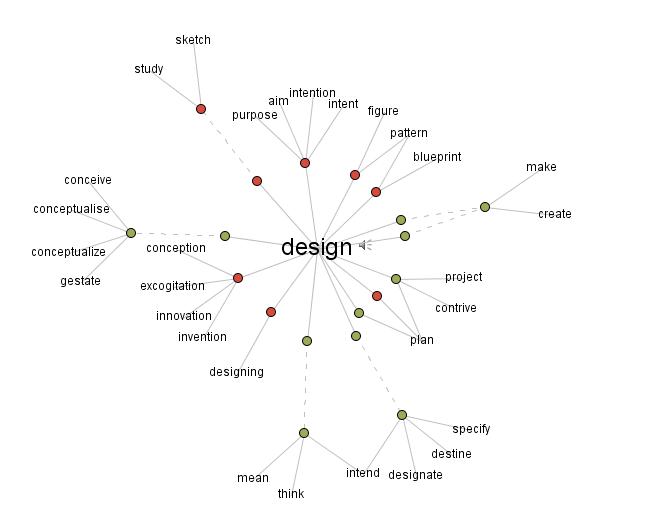
The diagram below was taken from Visual Thesaurus, an interactive tool that allows you to discover the connections between words in a visually captivating display.

Design Diagram

The connections and relationships between words are very interesting and meaningful.

If you could cross this diagram with one showing client’s requirements, environment & energy requirements and regulations, you would get a pretty good idea of what happens inside an Architect’s brain.

The Architect's Brain

The complexity of an Architect’s Brain, by Isabel Barros.

Why You Should Check Your Site or House for Geopathic Stress Lines

If you are planning to build a new home or finding your sleep and health disturbed in your current house (or office) you may want to consider having your property checked for Geopathic Stress Lines.

Geopathic Stress is said to be the result of spending long periods working or sleeping above any building or place where the Earth’s natural energy is disturbed by weak electromagnetic fields created by underground streams, certain mineral concentrations, fault lines and cavities.

Some classical symptoms often experienced are related to restless sleep, headaches, insomnia and fatigue.

Geopathic Stress Lines

While we are asleep our body should be resting so it can repair body cells, fight infections and absorb nutrients from food. However, it is believed that if we sleep in an area affected by Geopathic Stress, our body has to use all its energy just to keep its vital organs going. As a result our immune system becomes weakened, which means it has difficulty in absorbing nutrients or fighting off infections as efficiently as it should.  Then in the long term the stresses on our bodies will emerge as more serious conditions. Cancer is the most notorious of these, and tumours are known to develop almost always at exactly the spot where two or more GS lines cross a person’s body as they lie asleep in their bed. Other diseases often associated with GS lines are: leukaemia, lymphomas, multiple sclerosis, infertility, miscarriage, cot death, etc.

Read this article for a good insight on Geopathic stress lines with many case studies and examples. Click here.

On the other side, Geopathic Stress has been described as a pseudoscience by those skeptical of the concept. Many argue that it has no basis in legitimate science and that a variety of modern devices cause the same problems. I let you decide what to do but as they say in Portugal : “I don’t believe in witches, but that they exist, they exist ”.

If you need someone with good experience in GS lines in the Wexford area give a look at Brendan Murphy’s website.

There is also a quite interesting discussion with some testimonials here.

For me, as an Architect, it’s important to know about my client’s concerns regarding this issue so I can address them at an early stage when sitting the building on the site or when re-styling their house or office.

View Isabel Barros's LinkedIn profileView Isabel Barros’s profile

« Older posts Newer posts »