design + energy + excellence

Tag: Architects (Page 10 of 13)

And the Pritzker Prize 2012 Goes to…………Wang Shu


Wang Shu of The People’s Republic of China is the 2012 Pritzker Architecture Prize Laureate.


Wang Shu, the 2012 Pritzker Architecture Prize Laureate

Wang Shu, the 2012 Pritzker Architecture Prize Laureate


The international prize, which is awarded each year to a living architect for significant achievement, was established by the Pritzker family of Chicago through their Hyatt Foundation in 1979. Often referred to as “architecture’s Nobel” and “the profession’s highest honor,” it is granted annually.


Five Scattered Houses, Ningbo, China. Photo by Lang Shuilong.

Five Scattered Houses, Ningbo, China. Photo by Lang Shuilong.


[pinterest]

Wang Shu has often explained in lectures and interviews that “to me architecture is spontaneous for the simple reason that architecture is a matter of everyday life. When I say that I build a ‘house’ instead of a ‘building’, I am thinking of something that is closer to life, everyday life. When I named my studio ‘Amateur Architecture’, it was to emphasize the spontaneous and experimental aspects of my work, as opposed to being ‘official and monumental’.”


Xiangshan Campus, China Academy of Art, Hangzhou, China. Photo by Lv Hengzhong

[pinterest]

As a child Wang Shu moved around a lot with his parents living in houses as small as 15 sq.m.

When living in Xi’an, 1,000km west of Beijing, his family didn’t have a television. They use to sat on one bed chatting in the evening, which gave him a happy and interesting experience, he says.
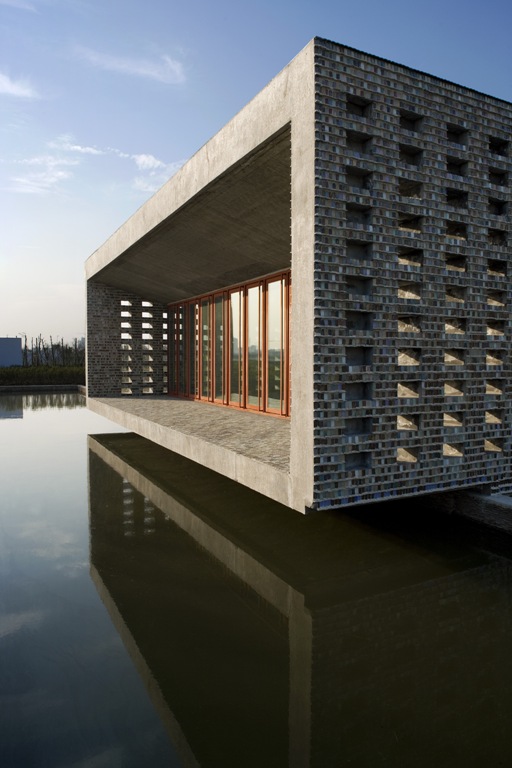
Ceramic House, 2003-2006, Jinhua, China. Photo by Lv Hengzhong

[pinterest]

Wang Shu felt the Tangshan earthquake in Xi’an in 1976. His family had to move to a bamboo shed where hundreds of families lived together. Each family was given an area the size of a double bed and they lived there for three months until they built a house with only 15 sq metre and one room!


Ningbo History Museum, Ningbo, China. Photo by Lv Hengzhong

Ningbo History Museum, Ningbo, China. Photo by Lv Hengzhong

[pinterest]

His philosophy of paying scrupulous attention to the environment suggests that buildings located between water and mountains should not be prominent.


Ningbo History Museum, Ningbo, China. Photo by Lv Hengzhong.

Ningbo History Museum, Ningbo, China. Photo by Lv Hengzhong.

[pinterest]

True to his methods of economy of materials, he salvaged over two million tiles from demolished traditional houses to cover the roofs of the campus buildings.
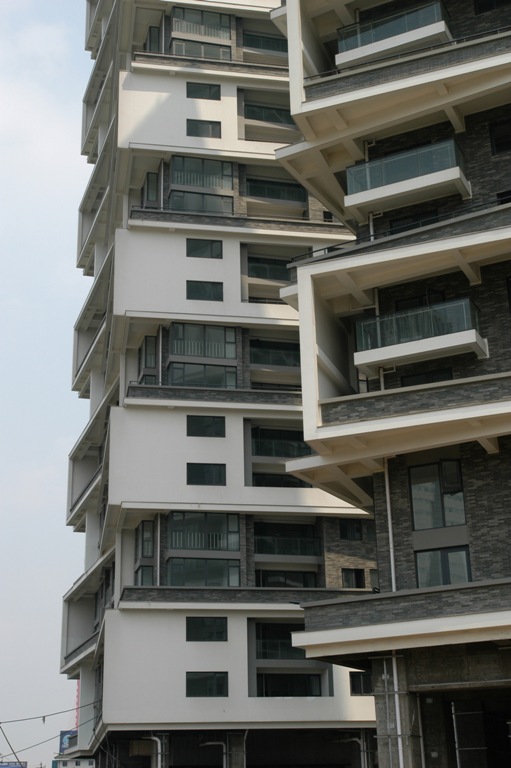
 

Vertical Courtyard Apartments, Hangzhou, China. Photo by Lu Wenyu.

Vertical Courtyard Apartments, Hangzhou, China. Photo by Lu Wenyu.

[pinterest]

Wang Shu is attracted by the variety of buildings just like the different lifestyles people have.He is certainly a gifted dreamer with an amazing life experience.


If you want to learn more about the Pritzker Architecture Prize check out the beautiful infographic created by Innovus. Click in the image below to see full infographic.


 Infographic by @Innovusdecors

Hedonistic Sustainability: Your Best Christmas Gift


Bjarke Ingels’ presentation at Architectural Record’s Innovation Conference 2011 touches the new concept of Hedonistic Sustainability that Ingel’s office (BIG) has been exploring in a number of projects shown in this presentation.

[youtube]http://www.youtube.com/watch?v=86pV3-BdmXU[/youtube]


The idea behind Hedonistic Sustainability is that architecture does not need to make a design sacrifice in order to be ecologically and economically conscientious.

The current way of thinking about sustainability incurs in undesired compromises that often start in the consumer’s pocket.


 

The approach to Hedonistic Sustainability supports that any strategies should be motivated by the desire for pleasure, increasing life quality and human enjoyment.

In order to complement this new ‘green concept’ Ingels says that architects need to become designers of ecosystems. I feel that architects have been designing ecosystems for a long time; the challenge is that we need to integrate many more resources these days.


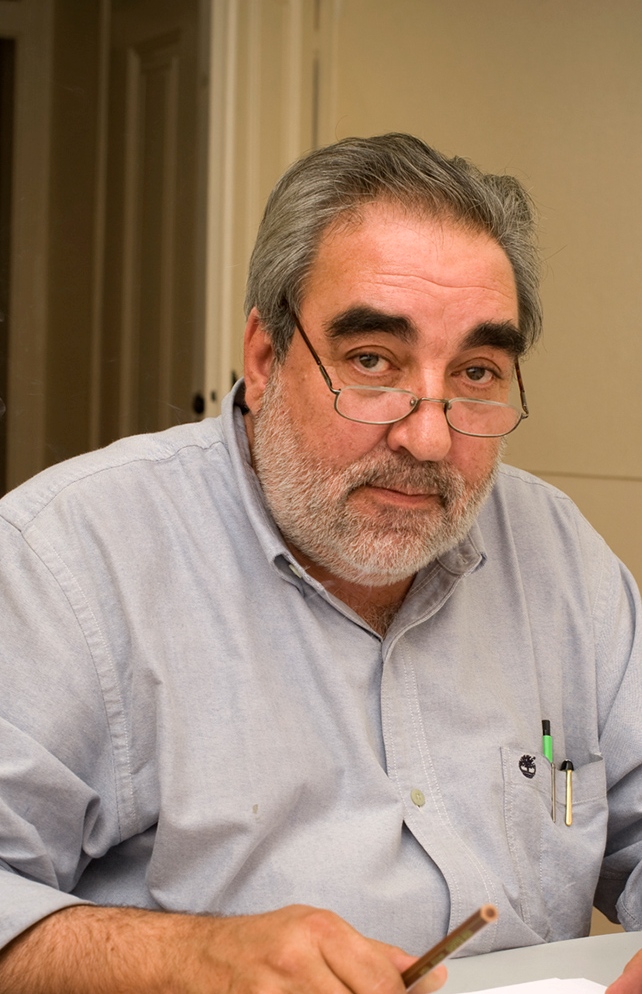
And the Pritzker Prize 2011 Goes to…………Eduardo Souto Moura

The Pritzker Architecture Prize is often referred to as the “architecture’s Nobel” and “the profession’s highest honor”. 2011 winner is Portuguese Architect Eduardo Souto Moura.

The purpose of the Pritzker Architecture Prize is to honor annually a living architect whose built work demonstrates a combination of those qualities of talent, vision and commitment, which has produced consistent and significant contributions to humanity and the built environment through the art of architecture.

Cinema House for Manoel de Oliveira


Eduardo Souto Moura is the second Portuguese architect to have been given the prize. Alvaro Siza Vieira was the first Portuguese awarded with this prestigious prize.

Contemporary Arts Center Graça Morais


Eduardo Souto Moura was born in Porto, Portugal in 1952. He began his career as an art student, studying sculpture, but eventually switched to architecture. He credits a meeting with Donald Judd in Zurich for the switch from art to architecture.

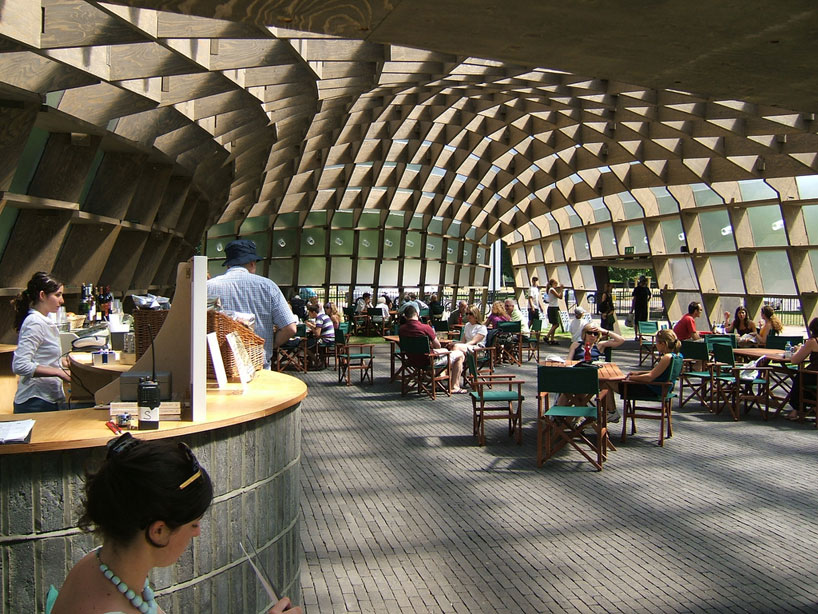
Serpentine Gallery Pavilion, photo by iqbal aalam.


Souto Moura has achieved much praise for his exquisite use of materials – granite, wood, marble, brick, steel, concrete – as well as his unexpected use of colour. Souto Moura is clear on his view of the use of materials, saying, “I avoid using endangered or protected species. I think we should use wood in moderation and replant our forests as we use the wood. We have to use wood because it is one of the finest materials available.”

2 Houses in Ponte de Lima


In an interview with Croquis, he explained, “I began my professional practice designing houses, I don’t know why— houses for my family and for my friends. And those houses, both urban and non-urban, had a typology. I believe that housing is something universal that historically has changed very little. The materials change, the building systems change, but the idea of a house as such is not something that has changed a lot.”

House in Cascais


At a series of forums called the Holcim Forum on sustainable architecture, Souto Moura stated, “For me, architecture is a global issue. There is no ecological architecture, no intelligent architecture, no sustainable architecture — there is only good architecture. There are always problems we must not neglect; for example, energy, resources, costs, social aspects — one must always pay attention to all these.”


Braga Stadium, photo (bottom left) by Carlos Coutinho.


Why Souto de Moura Won the Pritzker

President Obama presents the Pritzker Architecture Prize to Eduardo Souto

« Older posts Newer posts »