design + energy + excellence

Tag: Wexford (Page 7 of 8)

Looking For a Good Builder in Wexford?

If you are considering having building work done it is important to take time to make sure you choose the right builder.

Here are some tips that will help you to make the right choice and avoid problems:

1. Know what you want. Be as specific as you can. Prepare a detailed brief and, ideally, drawings that can show your intentions. If you hire an architect he/she will be able to prepare a set of tender documents that will include the full specification of the works and the tender drawings.


2. Ask for help from respected trade bodies.  Contact your local builder’s organization and ask for a list of registered members. Making sure builders are a part of a respected trade organisation, means that they have passed certain membership requirements and standards.
The Construction Industry Federation (CIF) represents the Irish construction industry.


HomeBond is a guarantee scheme established in 1978 by the Construction Industry Federation and the Irish Home Builders Association, in conjunction with the Department of the Environment. Homebond provides structural defect insurance, smoke penetration and water ingress cover and cover for loss of deposits or stage payments.


3. Ask for recommendations . Get in touch with friends and family who have recently had some work done and check if they were happy with their builder.


4. Prepare a shortlist . Find at least three builders who look like they will be able to do the work you need done in a professional manner. Ask the builders for references from previous customers and check them.


5. Get at least three quotes. Invite the builders to tender for your works. Send them all your tender documents detailing the works as much as possible. When you receive the quotes make sure you compare like with like. Does the quote show attention to detail with a breakdown of the project and materials? If little attention to detail is shown, or you can’t really understand how the builder came up with a figure, this should raise concerns.


6. Agree on the work in writing. At this stage you have done all your homework and you are ready to proceed with the builder you selected.  Agree on the work and document it. Use a contract. If you are working with a RIAI architect he/she will be able to advice about the best type of RIAI contract for your works. You can also download a sample contract template here.

If the builder does not want to commit to a written contract, don’t do business with them.
Having an agreement or contract in writing ensures that both parties are clear on exactly what is required, and is committed to the work.


7. Correct Insurance. Ensure that the builder’s public liability insurance is comprehensive and valid. If you are remodelling or extending your own house  contact your own insurance company to check how the building works affect your own insurance policies.


8. Agree a payment plan. Make sure everything is clarified before works start, especially regarding payments and when they should be made. Never pay the full cost of the project up front and avoid paying deposits.


9. Be careful of “VAT-free” deals. Any trader wanting payment in cash is usually doing so in order to avoid paying tax, and also to avoid responsibility in the event that anything goes wrong with the work. Without a proof of payment you may not be able to claim the costs you have incurred.

If any problems arise during the building work, talk with your builder about them straight away and make sure he fully understands your instructions.

Make yourself available for the people doing the work to contact you, so that they can raise any issues that arise and avoid any costly mistakes.

A good builder will belong to a Trade Association, undergo continuous training, have public liability insurance, be happy to give you an estimate in writing and will not ask for unusual payment methods.

The Dream Home…??…

A must read if you are thinking to hire any professional other than an Architect to design your house.

___________________

Dear Potential Client,

I was delighted to get your call saying that I was highly recommended by a contact of yours. You said you wanted to build a house.

I arranged to meet you and I showed you my portfolio and we talked about the different stages involved in designing and building a house. You said to be delighted with my work and asked for my fees. I said I would have to look at the complexity of the project and I would then send you a fee proposal.

Site and brief

Your site was very challenging, with a big slope and fantastic views. I was excited with this project. Your requirements were not unusual and your likes/tastes would certainly help to make this a great project – a dream home!

Image: Evgeni Dinev / FreeDigitalPhotos.net


Fee proposal and the waiting game

I sent you my fee proposal and I waited. And waited. And waited. I rang you and you didn’t answer the phone. I rang you again and I left a message. And I waited.

Surely, these decisions are not easy and I totally understand that. So, I waited. Eventually you replied saying that you have decided to give the job to someone else.

Image: Salvatore Vuono / FreeDigitalPhotos.net


Disappointment

I was disappointed but deep inside me I thought that you had appointed the other architect that you had mentioned to me and I felt that you would be in good hands anyway because he is a good professional.

Shock

Last week I was flickering my notes and came across our meeting. I decided to kill my curiosity and have a look at the County Council website to see what fantastic project my colleague had designed for you (so I thought!).

I was shocked to find out that you end up hiring an engineer to design your dream home. An engineer?! To me it was like seeing a Paediatrician performing a Heart Surgery. What a shock!

I had a look at your house drawings and I was perplexed to find out that your dream home looked like a bunch of terraced houses in a suburban setting. …So disappointing!


I could not identify any of the likes/tastes you shared with me on our meeting, your house looks massive, bulky and out of context. The volumes are boring and lack originality. The house does not sit well on the site and completely disrespects the site topography and landscape.  

At this stage, I wanted to know if the planners had approved your project. I kept browsing the file and came across some letters from TDs in support of your application.

I never quite understood why these letters are needed in a planning application but this is not the 1st time that I’ve seen projects with these type of letters being granted (I’m also aware, at least in one case, that this support is paid).

Honestly, I was hoping to see a refusal at the end of the file but that didn’t happen. Your project, surprisingly, got planning permission granted with some minor comments to its scale and bulk.

My social role as an Architect

My first reaction following this ‘discovery’ was to talk to you and tell you that that is not your dream home, it’s a badly designed house and not good architecture.

Image:Scott Liddell / morgueFile.com


You are probably blind to see this and I would look like a pretentious Architect if I was to make you aware of the above.

So I stayed quite and I decided to write this letter hoping to help someone in a similar position.

I thought for a while if there was a quick fix for your problem, but I couldn’t find any… I feel repelled to help you but the only solution I see is to redesign the all house, and I doubt you would do that now.

I’m sure that you will soon realise that saving a few €€€€ was not worth. After all you are building a house for life, it should be right, beautiful, in harmony, functional and fit your requirements, while blending with the landscape (if not improving it). It should be a piece of art, something to be proud of, something special, something UNIQUE! I feel sorry you didn’t get that.

Image: jdurham / morgueFile.com


Check out the 10 reasons why you should hire an Architect.

————————————————————————————-

Join our Facebook Group here.

View Isabel Barros’s profile  View Isabel Barros's LinkedIn profile

The New Headquarters for Wexford County Council

Site visit 08.05.2010

The new headquarters for Wexford County Council are due to be completed this summer.

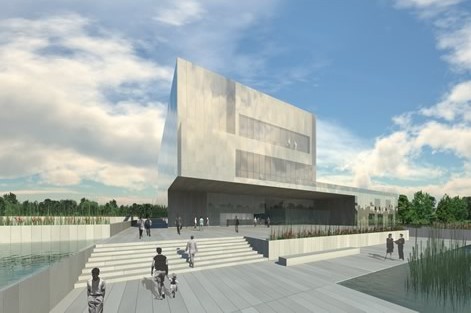
The building was designed by Robin Lee Architecture (formerly named NORD LLP) who subsequently formed an association with Arthur Gibney & Partners for the delivery of the project. The project was won following a two-stage international competition in 2007.

Wexford County Council

Main block and entrance

Wexford County Council

Image from the entry competition. Source: http://www.nordarchitecture.com/ Produced by: http://www.reformstudios.com/ 

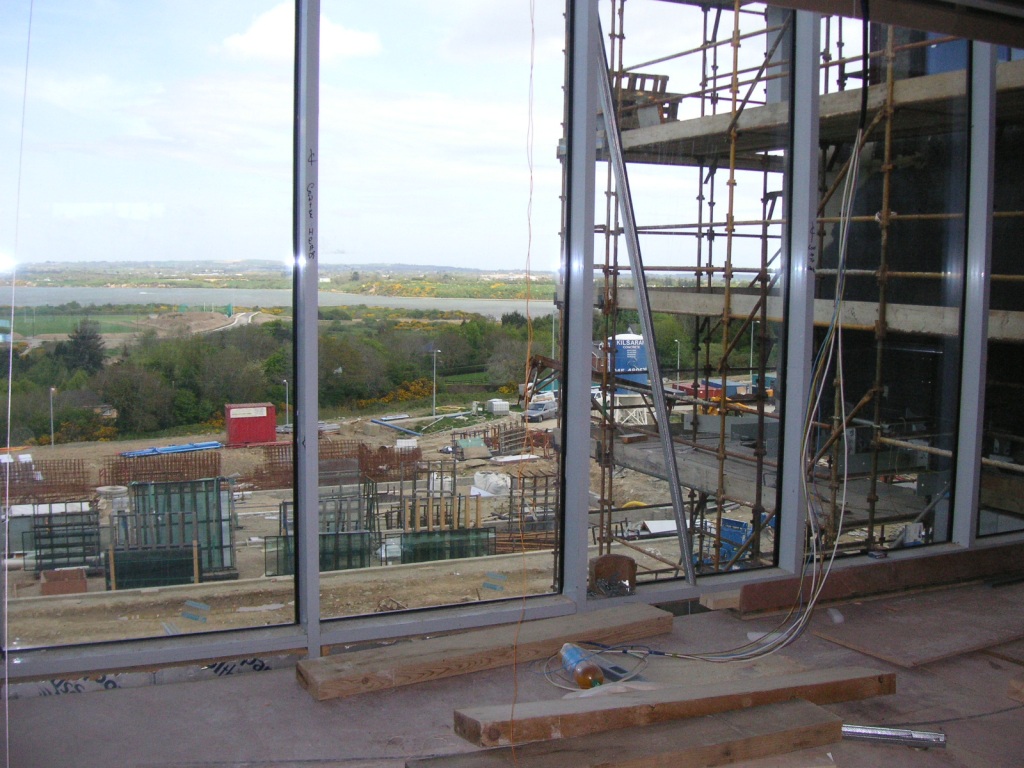
The design takes into account the steep topography of the site and fully embraces the privileged location overlooking the river Slaney.

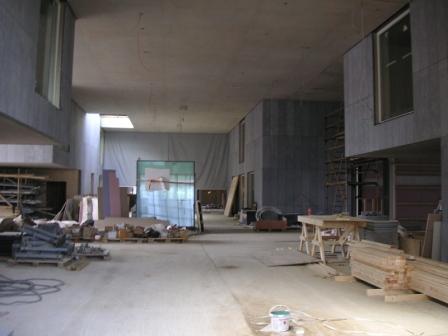
The building features an internal street which is the main organising element of the building. From here all the Council departments are accessed. This is the main circulation space and the design exploits the relation with the “townscape” environment giving each department an independent block that connects with all other elements allowing for public and social interaction.

Wexford County Council

The internal street

Wexford County Council

Image from the entry competition. Source: http://www.nordarchitecture.com/  Produced by: http://www.reformstudios.com/ 

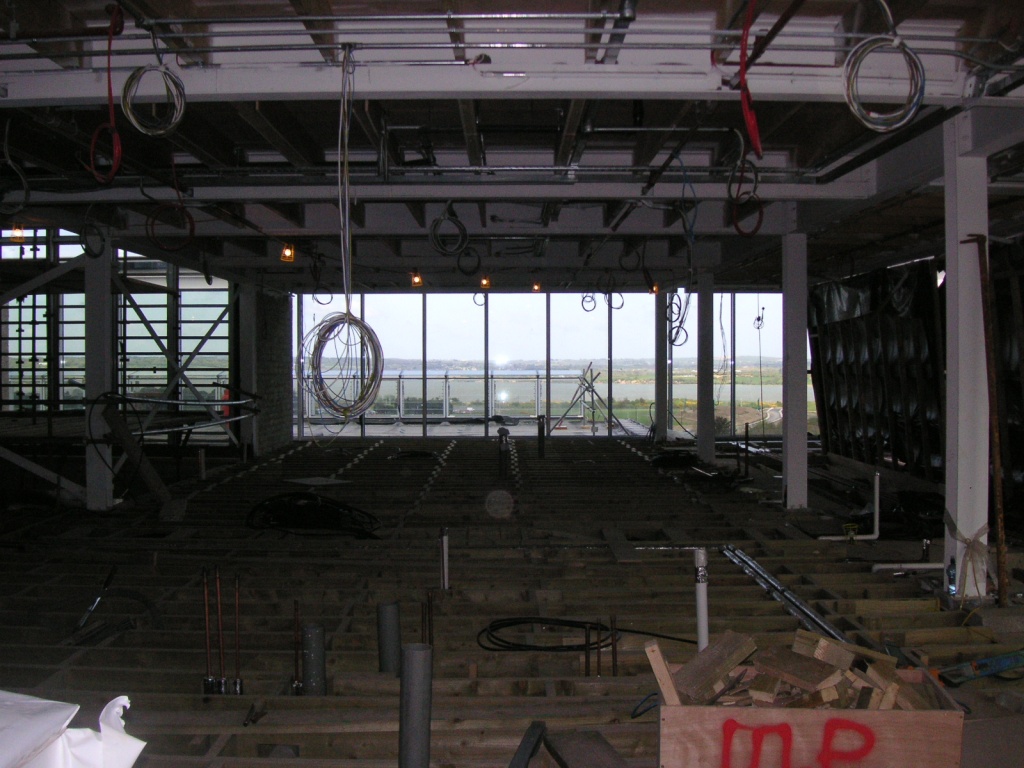
Many visual connections are established from the main circulation space. A strong relationship between interior and exterior is achieved by the framed views that punctuate the internal street. Extensive terraces are also accessible for full enjoyment of the fantastic views over river Slaney and Wexford town.

Wexford County Council

Wexford County Council

Staff restaurant with views over River Slaney

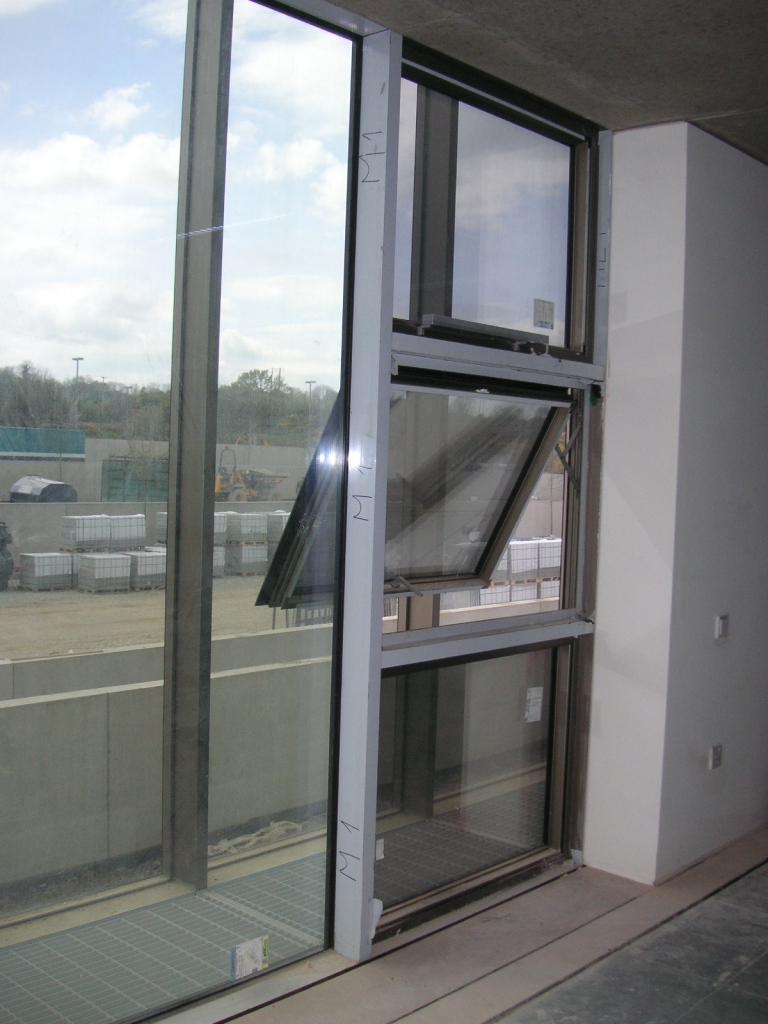
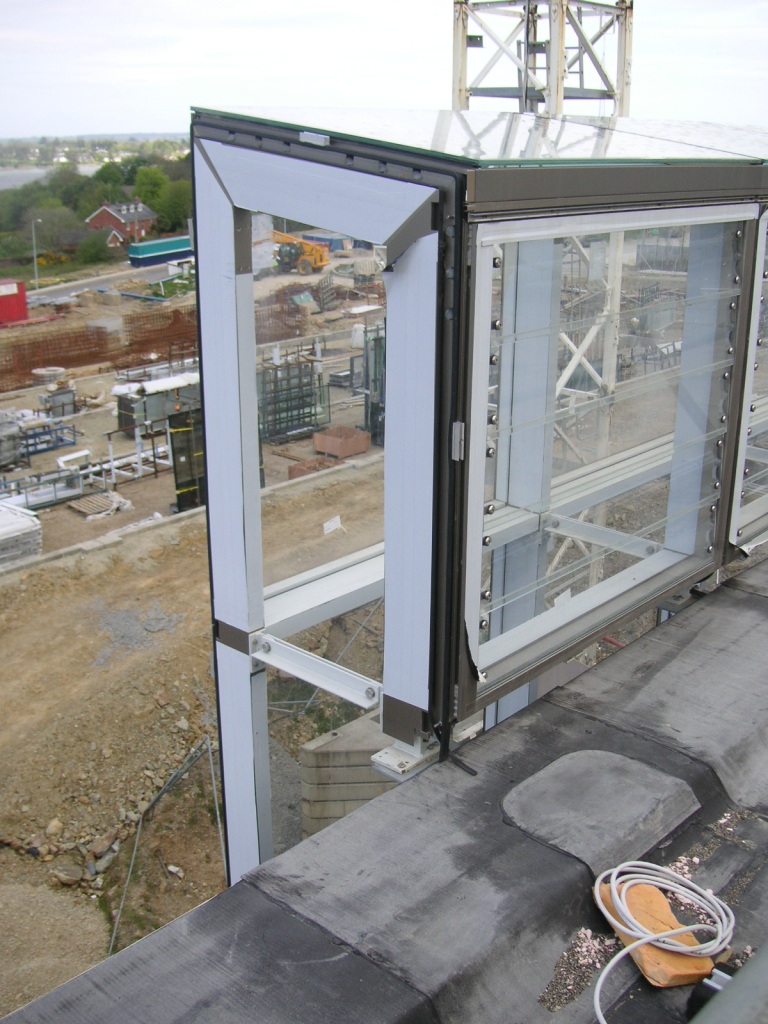
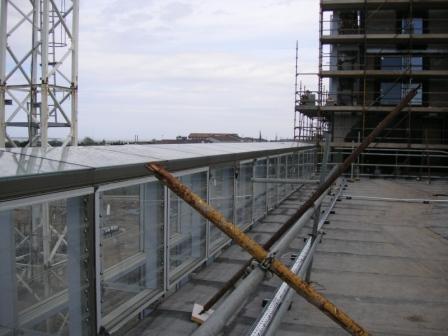
The €40 million council headquarters feature a double façade which wraps around the building, protecting it against the solar radiation while providing natural ventilation. This double skin acts as a thermal buffer between the building and the surroundings and has an important role in the sustainable environmental strategy.

Wexford County Council

Inner side of double façade with manual operated window at lower level and an electronically operated section at the top

Wexford County Council

Top of the naturally ventilated double façade system

Wexford County Council

Terrace of the Staff Restaurant with top of the double façade at the left

The new landmark 10,500 sq.m. building was originally designed for 370 staff and will now accommodate 300. The design attempts to provide a desk with a view for every staff member.

Wexford County Council

The new Corporate Department


More photos

————————–

Join our Facebook Group here.

View Isabel Barros's LinkedIn profileView Isabel Barros’s profile

« Older posts Newer posts »