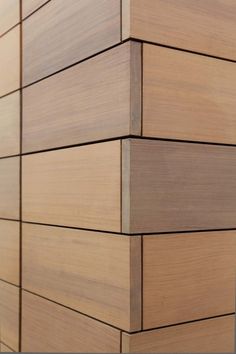
There are mainly 3 methods for fixing timber cladding: secret fixing, face fixing and invisible (or concealed) fixing.
In this article we look at some options for Invisible Fixing Timber Cladding. This is the less used method, the least available and likely to be the most expensive. This method is mostly used for open joint timber cladding when a face fixing is not desirable for aesthetics reasons or where cladding boards are prefinished with a film forming coating and there is a preference for not penetrating that film.
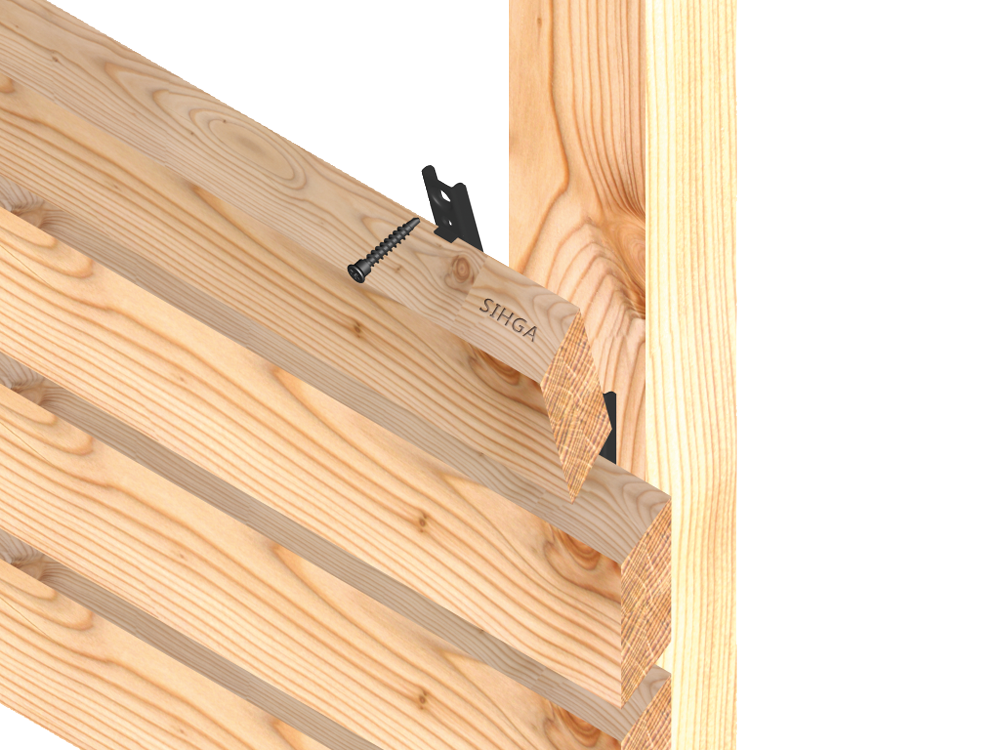
FassadenClip
These clips are manufactured in Austria by SIHGA. Russwood in UK can supply them to Ireland.
Below is an animation showing how these clips are assembled.
TIGA
These clips are manufactured in Austria by the FixingGroup. The boards need to be grooved to receive the clip.
ClipJuAn
This is actually a deck clip but can also be used for façades. The boards need to be profiled to receive the clip. There are only 4 machines in Europe that are able to profile the timber for this fixing system.
“Our plan is not to have a plan, face the uncertain, be open to the unexpected.” – Alejandro Aravena.
Alejandro Aravena, a 48-year-old architect based in Santiago, Chile is the 2016 Pritzker Architecture Prize Laureate.
Aravena has won some of the most prestigious architecture prizes in the world. This time he takes home the prestigious Pritzker Prize.
Alejandro Aravena, the 2016 Pritzker Architecture Prize Laureate
Since 2001, Aravena has been executive director of the Santiago-based ELEMENTAL, a “Do Tank,” as opposed to a think tank, whose partners are Gonzalo Arteaga, Juan Cerda, Victor Oddó, and Diego Torres.
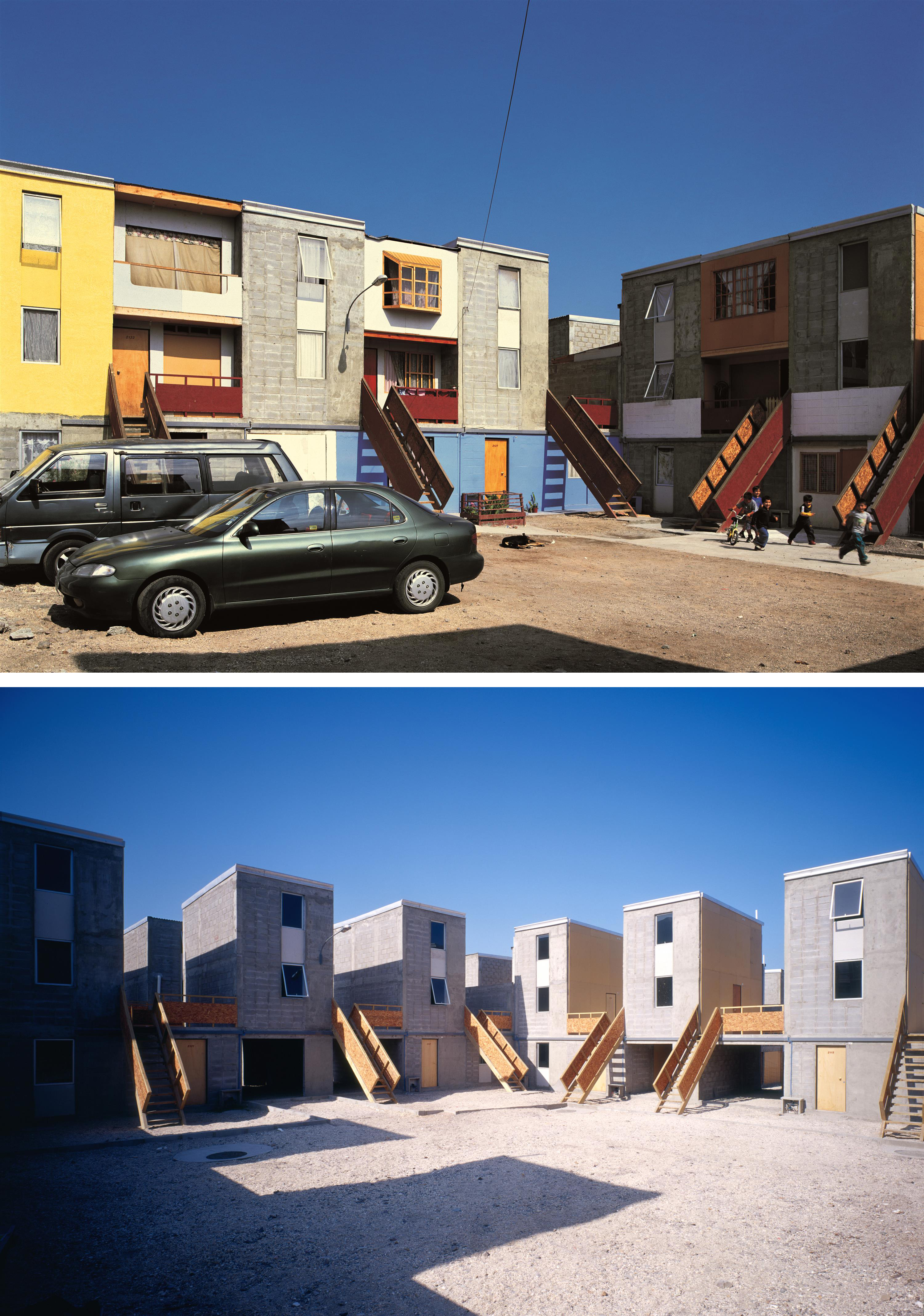
Quinta Monroy Housing, 2004, Iquique, Chile
ELEMENTAL has designed more than 2,500 units of low-cost social housing. Aravena’s social housing projects combine innovative architectural design with a social framework that encourages personal investment on the part of the inhabitants. It is a design that leaves space for the residents to complete their houses themselves and thus raise themselves up to a middle-class standard of living.
Monterrey Housing, 2010, Monterrey, Mexico
Aravena didn’t always have this faith. Shortly after graduating in the early 1990s, following a succession of “shitty clients … restaurants, bars, shops”, he got so disillusioned that he quit architecture and opened a bar. “I lived by night, waking up at 5pm and going to bed at 10am,” he says. When he eventually decided to resume his career, he got lucky. A sculptor asked him to design her house, and this was when he learned the lesson that perhaps makes him so intolerant of what’s on offer at the biennale. “I wanted to have that kind of freedom,” he recalls, “so I said, ‘Don’t pay me, but allow me to do whatever I want.’ I think I was rigorous enough, but it was still a completely stupid thing.”
Sculpor’s House, Santiago, Chile
“He understands materials and construction, but also the importance of poetry and the power of architecture to communicate on many levels.”, 2016 Pritzker Architecture Prize Jury.
Siamese Towers, 2005, San Joaquín Campus, Universidad Católica de Chile, Santiago, Chile
The 2016 Pritzker Architecture Prize Jury Citation states in part, “Alejandro Aravena has delivered works of architectural excellence in the fields of private, public and educational commissions both in his home country and abroad…. He has undertaken projects of different scales from single-family houses to large institutional buildings…. ”
Writer’s Cabin, 2015, Jan Michalski Foundation, Montricher, Switzerland
The thinking behind the ELEMENTAL project to improve social housing is based in 2 principles:
For poor people, location is even more important than is usually the case. The key question is – “Where is social housing located.”
A house should gain in value. Social housing should be an investment, not a social expense.
Villa Verde Housing, 2013, Constitución, Chile
Aravena’s work reminds us that architecture is not just a cultural act but a social one.
You can watch Aravena’s TED talk – My architectural philosophy? Bring the community into the process – here:
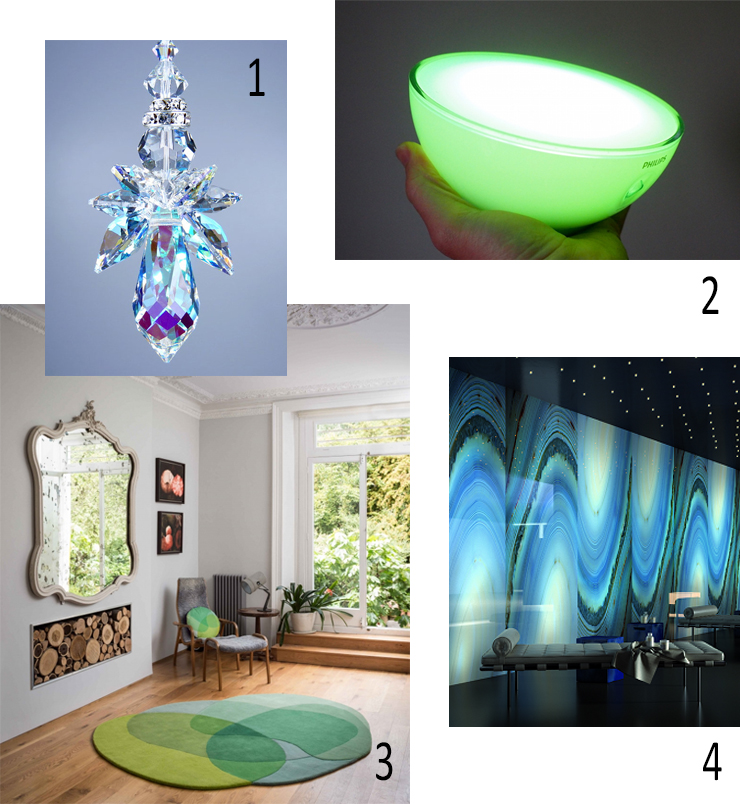
Features: Portable light. App control for extended Hue features. Tuneable white light and 16 million colours. 300 lumen light output. Smart battery management.
Isabel Barros Architects - Wexford is driven by a passion for creating high quality contemporary Architecture. Our goal is to make good design available to the general public while maintaining a strong focus on the energy efficiency and sustainability of our designs.
A graduate of Lusíada University in Lisbon, Portugal, Isabel is a Senior Architect with over 30 years experience. She is a registered member of both the Royal Institute of the Architects of Ireland (RIAI) and the Portuguese Association of Architects. Isabel is also Accredited in Conservation at Grade 3.