design + energy + excellence

Tag: construction (Page 4 of 12)

Invisible Business


There are mainly 3 methods for fixing timber cladding: secret fixing, face fixing and invisible (or concealed) fixing.

In this article we look at some options for Invisible Fixing Timber Cladding. This is the less used method, the least available and likely to be the most expensive. This method is mostly used for open joint timber cladding when a face fixing is not desirable for aesthetics reasons or where cladding boards are prefinished with a film forming coating and there is a preference for not penetrating that film.


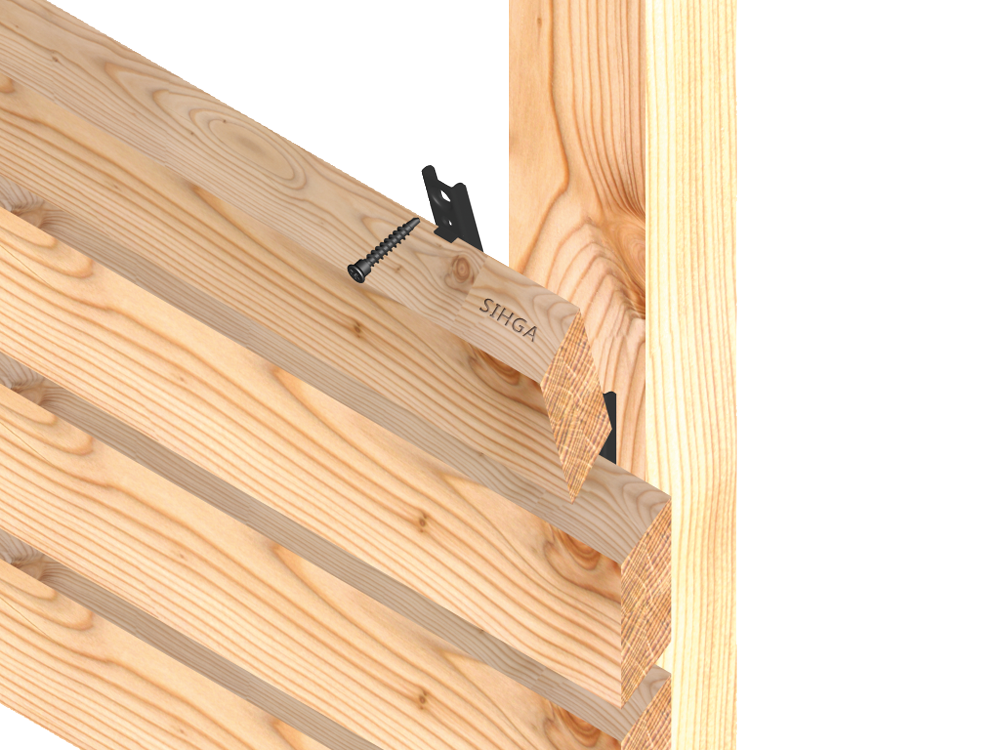
FassadenClip

FassadenClip-FCS_99014 FassadenClip-FCS_99014_AW-F1

These clips are manufactured in Austria by SIHGA. Russwood in UK can supply them to Ireland.

Below is an animation showing how these clips are assembled.


TIGA

P-Tiga-Fixinggroup


These clips are manufactured in Austria by the FixingGroup. The boards need to be grooved to receive the clip.


ClipJuAn

clipJuan

This is actually a deck clip but can also be used for façades. The boards need to be profiled to receive the clip. There are only 4 machines in Europe that are able to profile the timber for this fixing system.

These clips are manufactured in France by Architecture du Bois – Terrasses grad™.

Below is an animation showing how these clips are assembled.


Irish Construction Costs 2015

THIS ARTICLE IS OUTDATED – Click here for our most recent post about Construction Costs in Ireland (2019).

————–

Every year we share useful information to guide you on the costs for your construction project in Ireland. This will help you to estimate an approximate figure for your building costs.

You can check our other articles in this series here.

The construction sector is looking more positive than it has for several years, though there is still some way to go.

Tender prices increased by 5 per cent in 2014, following an increase of 3.1 per cent in 2013. Some reports predict that construction costs may increase by five percent in 2015 generally.

Average Irish Construction Prices 2015

The average construction costs table is generated using Bruce Shaw’s Cost Database and sets out typical building construction costs.

(Click image to enlarge)

Bruce Shaws Construction Costs

Labour rates and Construction Materials Prices

Turner & Townsend‘s annual construction cost survey provides a comprehensive and detailed overview of construction costs in Ireland, in 2015.

(Click image to enlarge)

Turner Townsend Costs 1

Turner & Townsend‘s annual construction cost survey provides labour costs and also the prices for some materials.
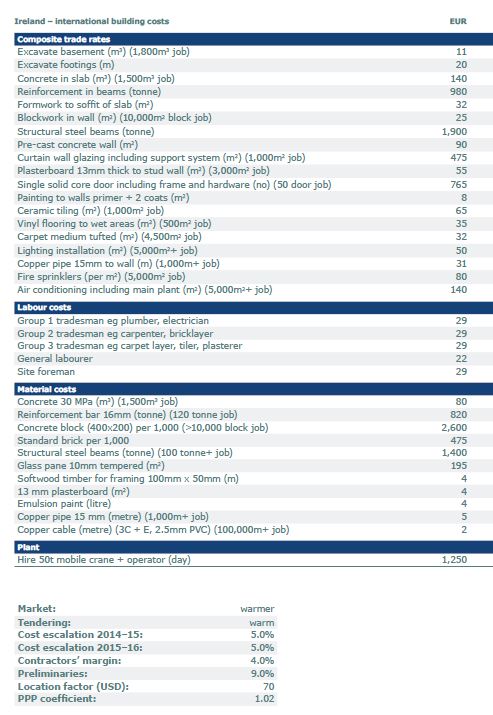
Turner Townsend Costs 2

Wholesale Price Index

In May 2015 CSO recorded that all building and construction materials prices increased by 1.6% in the year since May 2014.

The most notable yearly changes were increases in Hardwood (+12.3%), Stone (+8.5%) and Glass (+6.4%), while there were decreases in Other Structural steel (-4.4%), Ready mixed mortar and concrete (-2.8%) and Concrete blocks and bricks (-2.5%).

Typical Exclusions

There are a number of other expenses that you should also consider when estimating your project. See some of the exclusions that may apply to your project here.

Additionally, if your project needs to comply with the provisions of  the newly amended Building Control Regulations, you will have to consider:

  • Design Certifier Fees
  • Assigned Certifier fees
  • Increased Contractor’s Costs

Other Resources

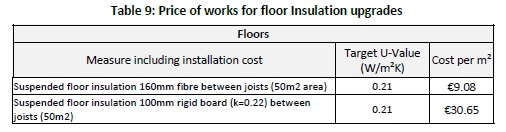
In August 2014 TABULA published “A detailed study on the energy performance of typical Irish dwellings“.

This study contains indicative prices for upgrades to Roofs, Wall Insulation, Floor Insulation, Heating Systems, Ventilation Systems and Renewable Energy Installation.

The figures displayed are the result of market research carried out by IHER Energy Services Ltd in July – August 2014.
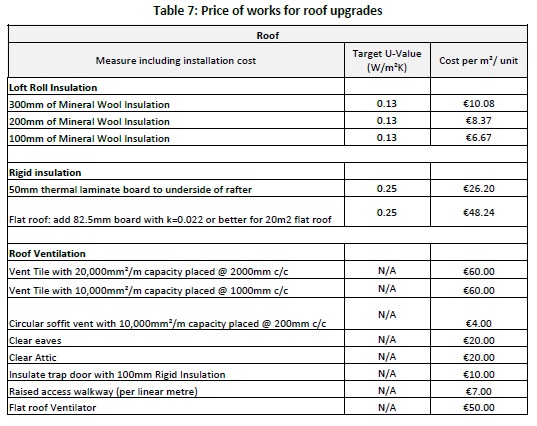
07. Price of works for roof upgrades_Tabula Study August 201408A. Price of works for Wall Insulation upgrades_Tabula Study August 201408B. Price of works for Wall Insulation upgrades_Contd_Tabula Study August 201409. Price of works for floor Insulation upgradess_Tabula Study August 201410. Price of works for Window and Door upgradess_Tabula Study August 201411. Price of works for heating system upgrades_Tabula Study August 201412. Price of works for Ventilation system upgrades_Tabula Study August 201413. Price of works for Renewable energy installation_Tabula Study August 2014

Check out our other articles in this series
Please Build Exactly as per Specifications


We always get nervous when the Contractor or the Client rings asking to change this or that. This would typically happen at construction stage and after we have spent long hours preparing construction drawings, specifications, etc. Many details are quite complex and it is not easy to change them from A to B in the hour. Furthermore, they are likely to involve extensive calculations to comply with Part L of the Building Regulations and possibly more research.

It would be easy enough to change the colour paint for a bedroom but changing a whole wall construction or even just the wall insulation is not that easy, it is time consuming and it kind of defeats the purpose of preparing pre-construction drawings.

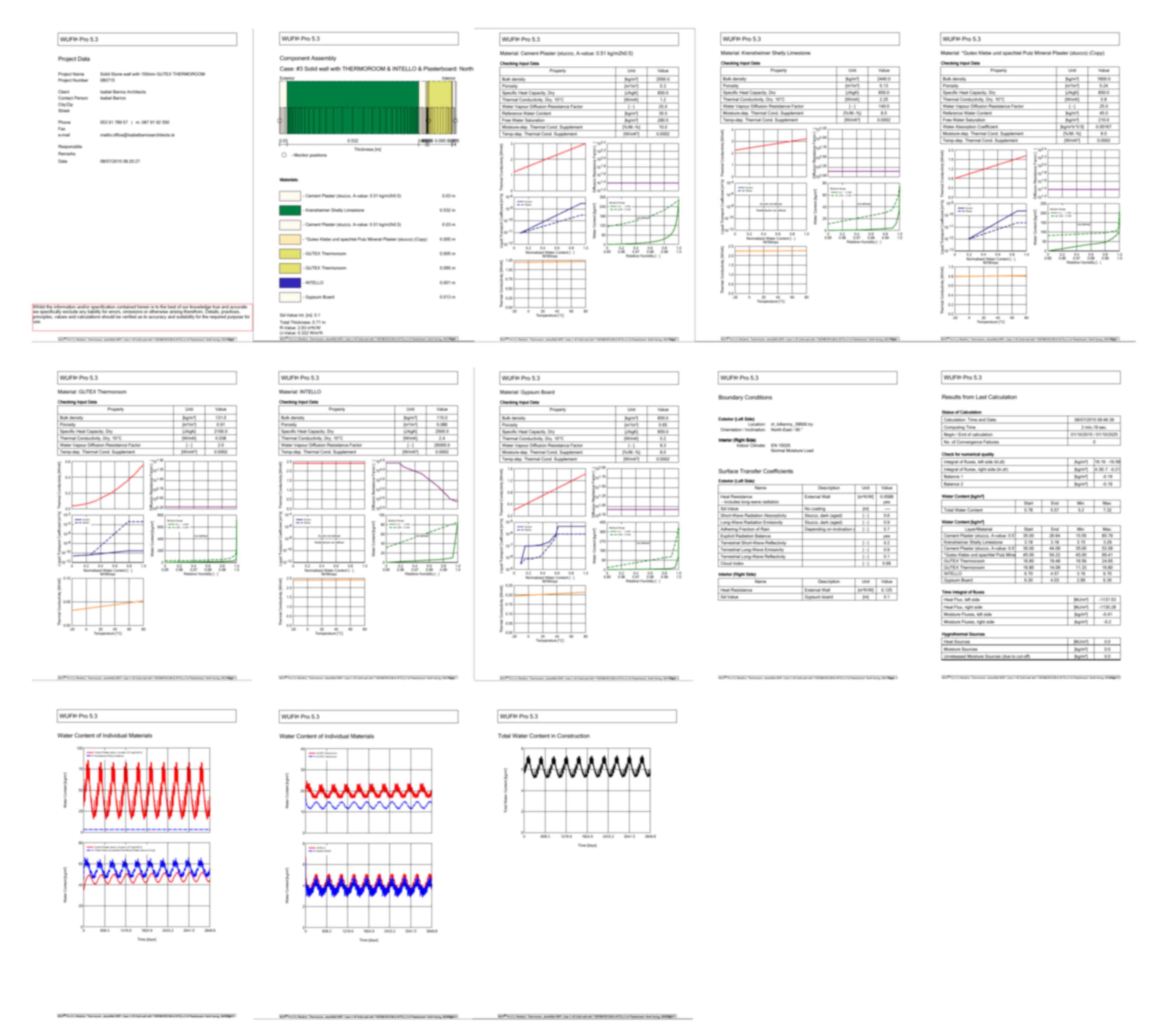
Recently we found out on site that an existing wall was not as we had assumed in our drawings and calculations. We were prepared to review the specification and there were notes in our drawings that requested the Contractor to confirm the type of wall before proceeding with works. This was not a change requested by the client or contractor, it is just an example of what is involved when something changes. Between research, new drawings, calculations, etc there were about 10 hours extra to properly detail this variation. The image below shows one of the U-value calculations for just ONE wall. The client rarely gets to see all the work that is involved when things change on site.

WUFI-calculations2


In conclusion, unless there is a really good reason to change the specification, please think careful before you ask and please understand the implications not only for your Architect but also for the Assigned Certifier.

And even more important – please do not change the specifications without getting permission from the Architect/Contract Administrator!


« Older posts Newer posts »