It is not always easy to find the right Architect in Wexford or elsewhere. There are many factors that you should consider before you make a decision.
Some of these factors will be easy enough to evaluate, others will require a bit more research, one or two meetings, or asking for references.
Below are the factors I consider to be the most important ones.
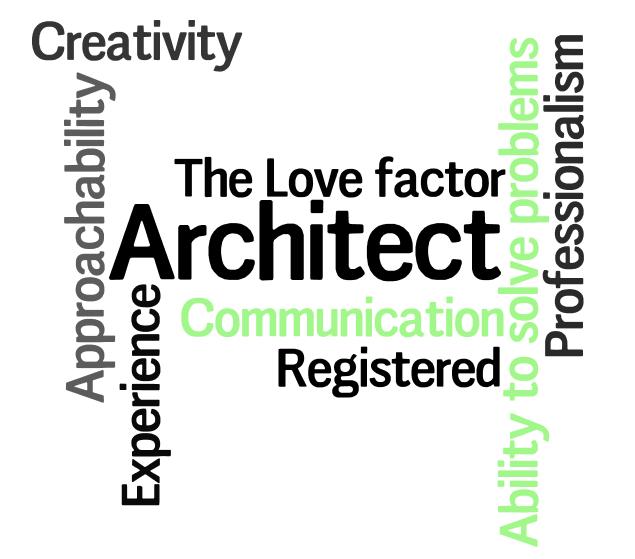
Registered with a professional association (RIAI, RIBA, etc)
 In Ireland, the title ‘Architect’ is registered and a person cannot practice as an Architect unless he or she holds the relevant qualifications. Prior to becoming an RIAI-registered architect, architects will have trained professionally for seven years, in approved universities and institutes. Architecture is one of the longest training among the professions in Ireland. RIAI Architects are required to continually seek to raise their standards of excellence in all relevant areas.
The RIAI requires to its members a minimum of 40 hours of CPD (Continuing Professional Development) activity in the course of each year.
Experience
 An experienced Architect would have dealt with a number of different projects and would be familiar with all stages of a project. Just like in any other profession this experience will make him/her more diligent and knowledgeable and this can save you lots of time and money.
Creativity
A talented architect can create projects that are not only functional but aesthetically beautiful, interesting or even sexy! Architects are trained to use their imagination in a wide variety of scenarios. You should be able to evaluate this by looking at the Architect’s work.
Ability to solve problems
 Every construction project will have its problems. Having the ability to solve them promptly and wisely is something that comes with experience.
Communication
It is important to feel that you and your Architect can “sing from the same hymn sheet”. Your Architect should have excellent listening skills and believe me many times he/she will act as your psychologist. Use your first instinct to feel if you connect well or not, all going well trust will come along and your treatment will be over soon.
It is also important that your Architect is able to communicate ideas effectively – to clients, engineers, planners, contractors, etc.This will make everybody’s life much easier.
Professionalism
 Professionalism can be easily spotted on the first contact. An email, a phone call, a fee proposal or a meeting may be all you need to evaluate if you are dealing with a true professional or not.
Approachability
You want your Architect to be there every time you need him/her (it’s a bit like a Doctor). You want to feel that he/she is easy to approach and easy to contact. A live Twitter feed or Facebook page are great to assure you they ARE there when you need. Mobile phone or email are essential. Skype is the cherry on top of the cake.
The Love factor
 This is a bit like the ‘X’ factor, your Architect either have it or not. Architects with ‘Love’ factor will go the extra mile to ensure they are happy with their work and the client is extra happy with them. This involves time, dedication and passion and not every Architect will be willing to give you this. I do not know many Architects that have this factor but if you are in County Mayo (or close enough) drop by Mark Stephens Architects and you will not be disappointed.
Many other factors are important but it will be very difficult to evaluate them before you engage an Architect.
If you are still not sure why you should hire an Architect have a look at our articles ‘10 Reasons Why You Should Hire an Architect‘ and ‘The Dream Home…??…‘.
Posted by Isabel Barros May 22, 2013
 View Isabel Barros’s profile
Icons by Visual Pharm