Archive for Construction

Visit to Power Tower Energy AG in Austria

Power Tower_Austria

The Power Tower in Linz, Austria is the first office tower to attempt to meet the Passive House standards.

This visit was part of the Renewable Energy Research Trip to Austria that took place in November 2011.

The Power Tower was built to house the corporate headquarters of the Austrian utility company Energie AG. The new offices were built from 2006 to 2008 on the same location of Energy AG previous headquarters built in the 1930s. We were told that when they demolished the original building everything that was possible to reuse it was kept and used in the new building.


Energy Systems

The Power Tower is not dependent of fossil fuels. The energy is obtained through the soil and the ground water, and/or generated by the solar panels that are integrated into the façade.

Façade

Dieter Moor from Ertex Solar was our guide for this visit. He explained the façade was specifically developed for this project and 90% of the solar heat remains outside the building, therefore it was not necessary to install a conventional air-conditioning system. The building envelope was specially engineered to allow maximum day lighting while minimizing solar gain, which would normally be excessive and require a great deal of active cooling.


The façade system is made of enclosed panels (with no access), quadruple glazed, and the outside pane has two glass panels laminated together. A small device inside each module sucks the air and moisture. The U-Value is 0.5 W/m².

60% of the Power Tower façade is transparent, the remaining 40% have an opaque surface highly insulated.


The South façade has three vertical photovoltaic bands that cover approximately 650m² and generate about 42,000 kWh of electricity per year (10% of the building’s energy).


Heating and Cooling

A combined heat-pump plant provides 100% of the energy to the heating, cooling and ventilation systems of the high-rise office building.

Power Tower - Plant Room

Power Tower - Plant Room


The soil and the ground water are used as thermal sources. Depth probes and foundation piles extract the energy for heating and cooling from the ground.


Power Tower - Manifold for the 46 geothermal wells


Beneath the building, 46 geothermal wells, each 150 m deep were drilled prior to construction (this is nearly 7 km of boreholes!).

As a special feature the heat accumulated during cooling operations in the summer is pumped back into the soil and can be used for heating in the winter.


Ventilation

Heating and cooling panels with radiation effect are suspended from the ceiling. A controlled ventilation system supplies fresh air, as the windows of the building cannot be opened.


Lighting

A total of almost 700 LED lighting elements were installed, which create extraordinary light effects. This artistic light installation uses a maximum of 1.4 kW, which is less electricity than is consumed by a commercial vacuum cleaner.


Power Tower - Internal Courtyard


Fact sheet

Gross floor space: 32,872 m² (incl. underground garage)

Façade surface: 11,620 m² (of this photovoltaic surface 637 m²)

Height of tower: 73 m

Number of floors in tower: 19

Number of floors in underground garage: 2

Number of garage parking spaces: 246

Maximum heating output: 700 kW

Maximum cooling output: 800 kW

Construction costs: €42 million euro (excludes sustainable energy grants)


Isabel Barros


What do you think of this post?
Awesome (0) Interesting (1) Useful (0) Nice (0)
Did you like this? Share it:

Average Irish Construction Costs 2011

Construction Costs in Recession Ireland and Useful Tools to Estimate Your Construction Costs are two of the most popular posts in our blog.

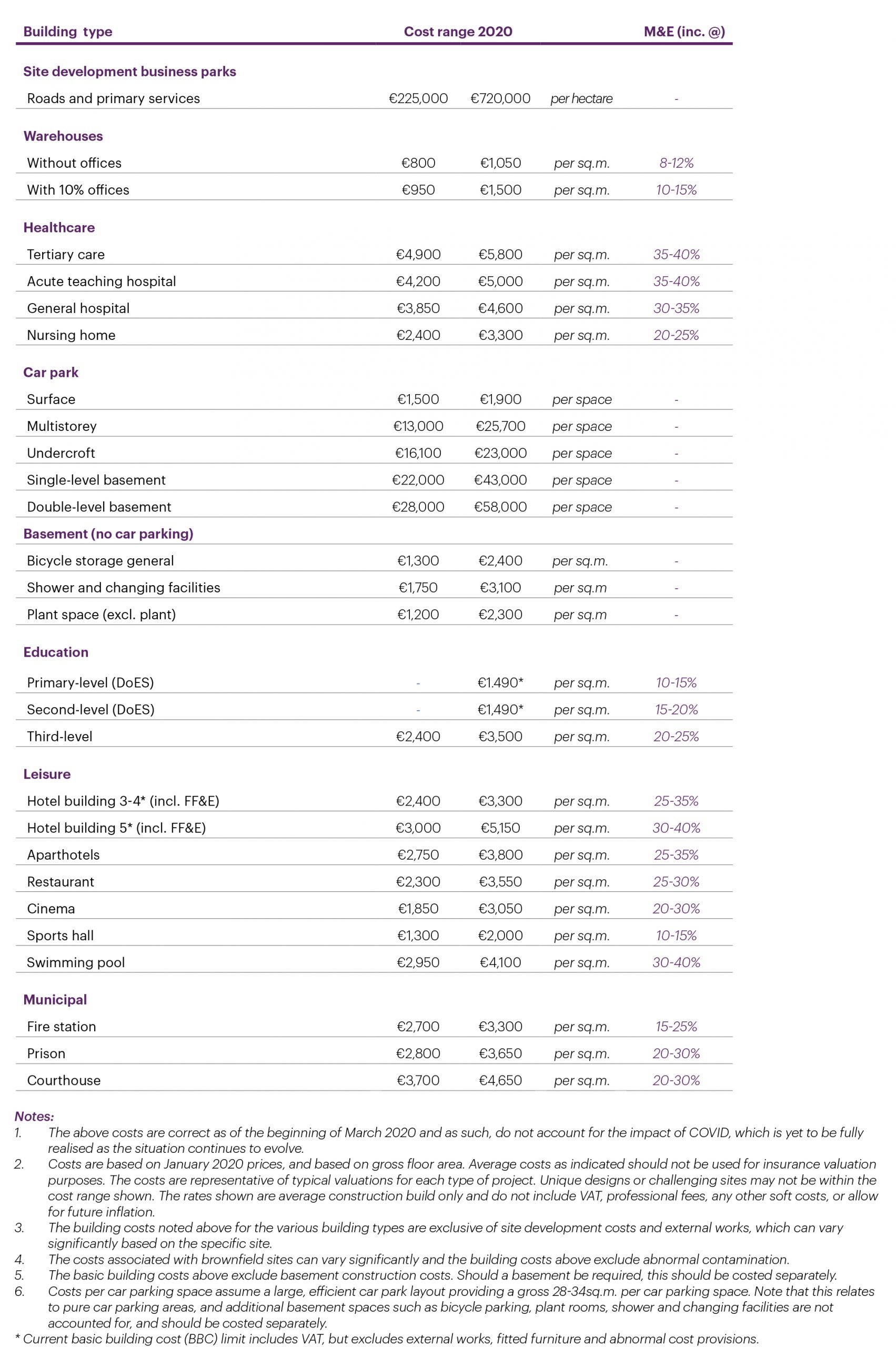
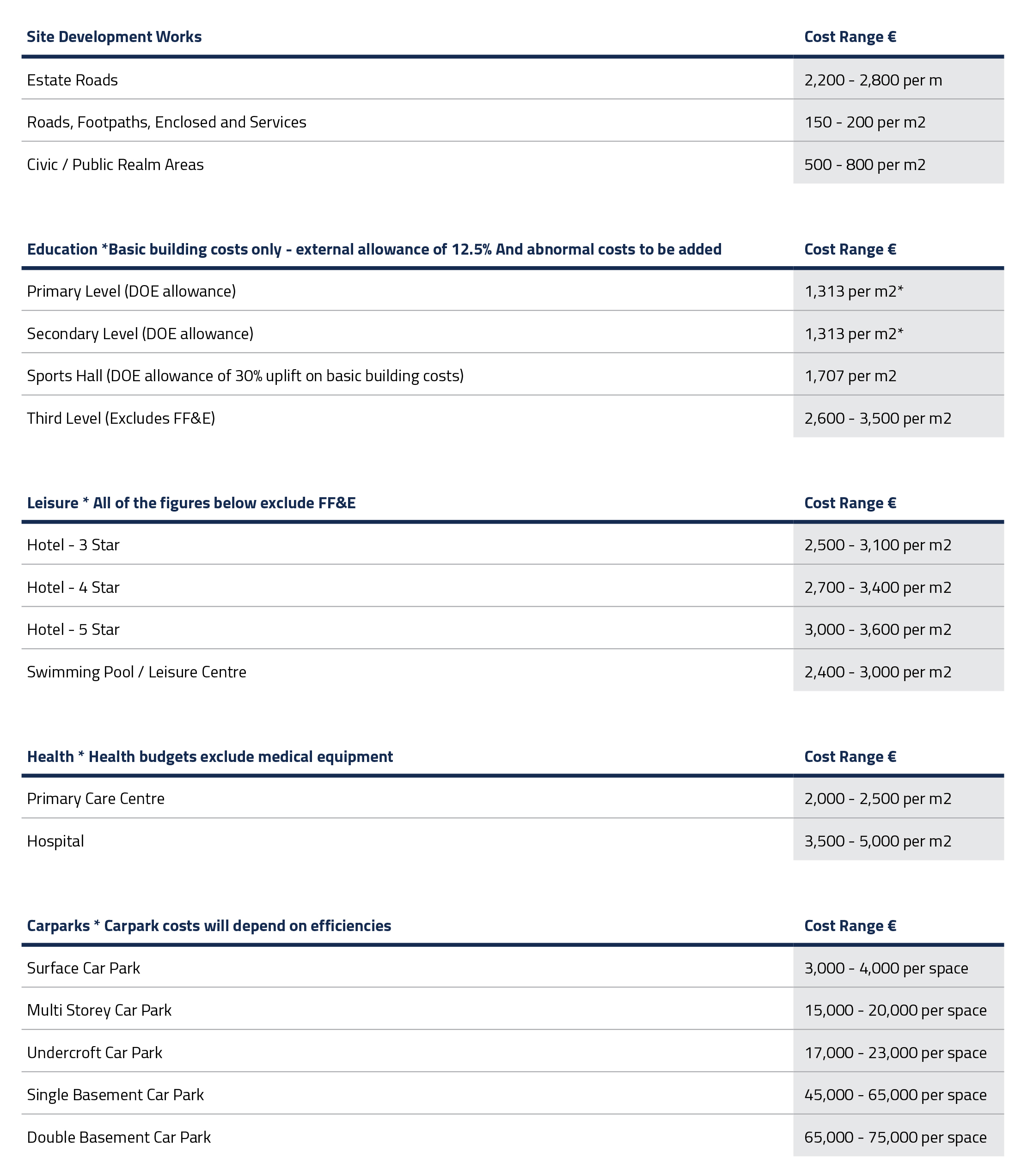
This time we bring you the Average Irish Construction Costs for 2011 as published by Bruce Shaw in their latest Handbook 2011.  Bruce Shaw is one of Europe’s leading quantity surveying practices, they provide construction cost management, construction project management and consultancy services.

The average construction costs table is generated using Bruce Shaw’s Cost Database and sets out typical building construction costs.

(Click image to enlarge)


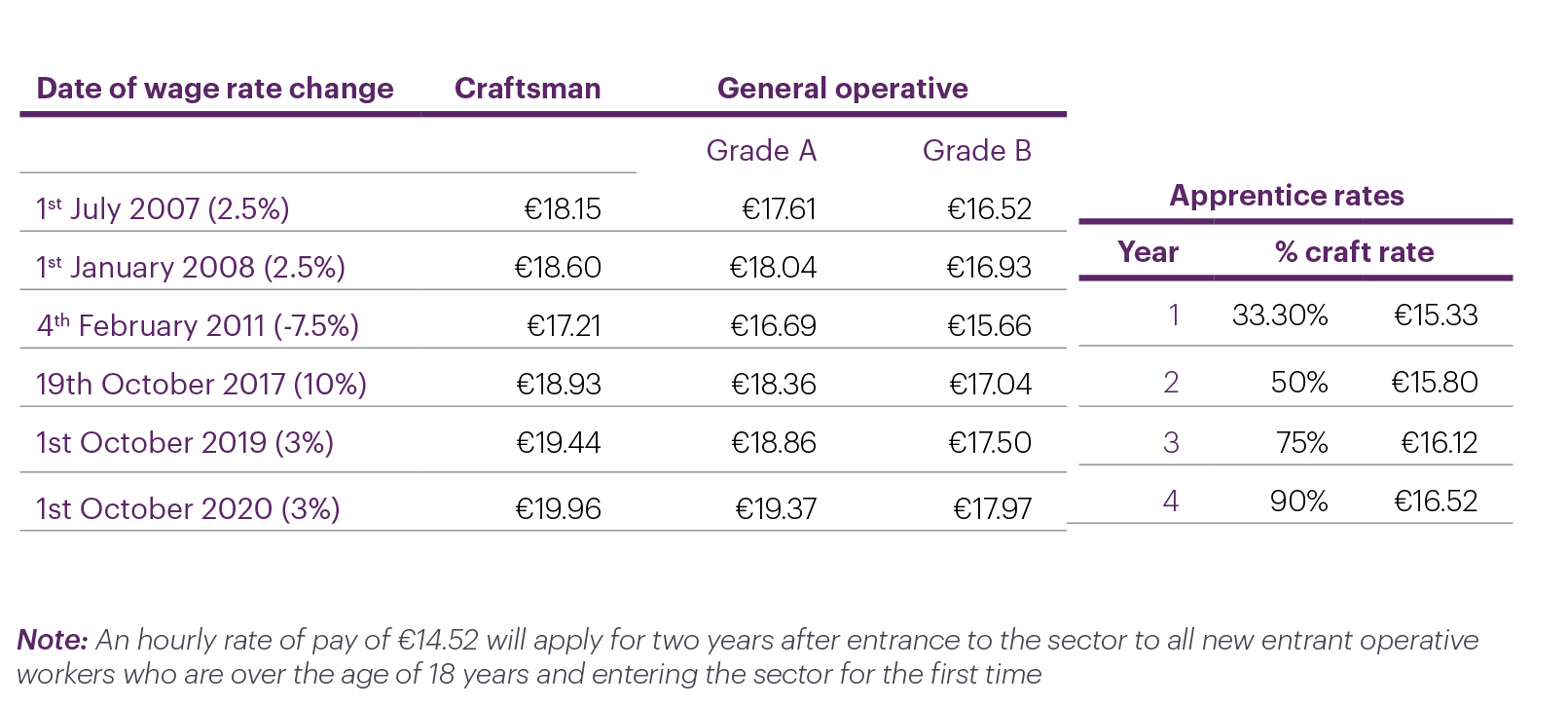
The basic hourly wage rates for Craftman and General Operatives are approximately 5% lower than 2008 rates.

(Click image to enlarge)


The Society of Chartered Surveyors publishes every year a guide to rebuilding costs in Ireland. This guide is intended to assist in insuring a house and the costs included are based on building rates as of March 2011.

(Click image to enlarge)


Check out our other articles in this series.

What do you think of this post?
Awesome (0) Interesting (0) Useful (0) Nice (0)
Did you like this? Share it:

Free Tickets for SelfBuild Extend & Renovate Show 2011

We have FREE tickets to give away for the Selfbuild Extend & Renovate Show in Dublin 9-11 Sept.

Just let us know you want one!

 SelfBuild Tickets

The SelfBuild Show will feature new products and technologies to enable and promote sustainable building practices throughout Ireland.

You can find out about the latest products and technologies that can help you with your project.

The Show will also include Free Seminars and Live Demonstrations.


Improve Your Home Zone

If you’re thinking about home improvements, from extensions and conversions to simply re-tiling the bathroom, then the Improve Your Home Zone is where to start. The Improve Your Home Zone will provide practical demonstrations on a range of popular topics: Flooring & Tiling, Extensions & Attic Conversions, Painting and Decorating, Insulating Your Home and Saving Energy.


Experts Advice Area

A separate area is provided with specialists in extensions, renovations and conversions as well as landscape architects and interior designers offering free information and advice.


Free Tickets

The Free Tickets value €20 each and admit 2 persons. Children under 16 Free.

Just let us know you want one and we will post it out to you.

What do you think of this post?
Awesome (0) Interesting (0) Useful (0) Nice (0)
Did you like this? Share it:

Do I Need a Contract for My Project?

On further investigation, the question divides into two parts:

  1. Am I required by law to have a contract?
  2. If not, should I have a contract anyway – or as it’s sometimes expressed: ‘can I get away without one’?

Am I required by law?

I should perhaps start by saying I always find it a little strange that anyone contemplating having expensive construction work carried out should even consider the possibility of not wanting to know precisely what the terms and conditions are. It is always a source of puzzlement that parties to jobs with a value of millions should apparently find the cost of less than £50 for some formal contract documentation to be prohibitive.

There is no overarching ‘legislative’ requirement, in the sense that a general law exists requiring all parties to have a specific type of agreement.

Should I have a contract?

The simple answer is an emphatic ‘yes’. But the truth is that you probably do anyway.

Let us look at what a contract represents. A contract typically will result when one party agrees to do something for another in return for ‘consideration’ – usually expressed in monetary form. Essentially it is simply a set of ‘conditional’ promises: “If Party A does this, then Party B will do that” and so on. The terms of that contract may be many and varied, however. They will reflect the complexity of what is being done, and the method used.

It doesn’t have to be written down, but it certainly helps if it is. If the agreement is verbal, then how do you remember what they were, but even if it’s in writing, are the words free of ambiguity, or could they be interpreted differently by someone else?

If a project ends in dispute, this is one of the first problems the person tasked with sorting it out has to resolve. If you have no record of what’s been agreed, how can you know what to do if something goes wrong?

Summary

If you buy a TV, car, garden shed, or even an existing house, you can usually go and see it and look around before deciding whether to proceed. If, however, you are buying a new building, the chances are you are buying into a concept: a design idea which has yet to be realised. To many Clients, this is a leap of faith; building is not their core business, so they may not have the technical capability to visualise what is being described to them, despite advances in computer models and 3D software.

For the uninitiated, or even the experts, this can be a difficult task. Having a contract and knowing what the terms are at least brings some certainty. So why anyone would want to attempt it without one is a mystery.


Read more Contracts are for wimps: why would I need a (standard) building contract?

by Roland Finch
NBS Technical Author

via NBS 


What do you think of this post?
Awesome (0) Interesting (0) Useful (0) Nice (0)
Did you like this? Share it:

Looking For a Good Builder in Wexford?

If you are considering having building work done it is important to take time to make sure you choose the right builder.

Here are some tips that will help you to make the right choice and avoid problems:

1. Know what you want. Be as specific as you can. Prepare a detailed brief and, ideally, drawings that can show your intentions. If you hire an architect he/she will be able to prepare a set of tender documents that will include the full specification of the works and the tender drawings.


2. Ask for help from respected trade bodies.  Contact your local builder’s organization and ask for a list of registered members. Making sure builders are a part of a respected trade organisation, means that they have passed certain membership requirements and standards.
The Construction Industry Federation (CIF) represents the Irish construction industry.


HomeBond is a guarantee scheme established in 1978 by the Construction Industry Federation and the Irish Home Builders Association, in conjunction with the Department of the Environment. Homebond provides structural defect insurance, smoke penetration and water ingress cover and cover for loss of deposits or stage payments.


3. Ask for recommendations . Get in touch with friends and family who have recently had some work done and check if they were happy with their builder.


4. Prepare a shortlist . Find at least three builders who look like they will be able to do the work you need done in a professional manner. Ask the builders for references from previous customers and check them.


5. Get at least three quotes. Invite the builders to tender for your works. Send them all your tender documents detailing the works as much as possible. When you receive the quotes make sure you compare like with like. Does the quote show attention to detail with a breakdown of the project and materials? If little attention to detail is shown, or you can’t really understand how the builder came up with a figure, this should raise concerns.


6. Agree on the work in writing. At this stage you have done all your homework and you are ready to proceed with the builder you selected.  Agree on the work and document it. Use a contract. If you are working with a RIAI architect he/she will be able to advice about the best type of RIAI contract for your works. You can also download a sample contract template here.

If the builder does not want to commit to a written contract, don’t do business with them.
Having an agreement or contract in writing ensures that both parties are clear on exactly what is required, and is committed to the work.


7. Correct Insurance. Ensure that the builder’s public liability insurance is comprehensive and valid. If you are remodelling or extending your own house  contact your own insurance company to check how the building works affect your own insurance policies.


8. Agree a payment plan. Make sure everything is clarified before works start, especially regarding payments and when they should be made. Never pay the full cost of the project up front and avoid paying deposits.


9. Be careful of “VAT-free” deals. Any trader wanting payment in cash is usually doing so in order to avoid paying tax, and also to avoid responsibility in the event that anything goes wrong with the work. Without a proof of payment you may not be able to claim the costs you have incurred.

If any problems arise during the building work, talk with your builder about them straight away and make sure he fully understands your instructions.

Make yourself available for the people doing the work to contact you, so that they can raise any issues that arise and avoid any costly mistakes.

A good builder will belong to a Trade Association, undergo continuous training, have public liability insurance, be happy to give you an estimate in writing and will not ask for unusual payment methods.

What do you think of this post?
Awesome (0) Interesting (0) Useful (0) Nice (0)
Did you like this? Share it:

Useful Tools to Estimate Your Construction Costs

The first post of this series was published a year ago and revealed to be very useful judging by the number of hits every day.

Although the construction tender prices in Ireland have fallen by 11% over the last 12months the rate of decline is starting to slow down.

Please be aware that the high-risk strategy that some Contractors are using to persistently offer low tender prices increases the risk of insolvencies. That’s why you need to be very careful when choosing a contractor and make sure you have a well written Contract in place.

In this 2nd post we give you some more useful references to help you with cost guidance on your project.

Selfbuild Rates is an online system that allows you to calculate the true cost of your build.

Bruce Shaw provides a Cost Calculator in their website but please note their construction cost database does not include Residential Projects (only Commercial Offices, Warehouses and Retail).

Check your Price helps you estimate both typical labour only costs for all types of home improvement installations, renovations and repairs as well as the overall costing for complete refurbishment projects & building renovations. This website provides general building costs in UK for a number of different categories.

The British Magazine Homebuilding & Renovating lets you download the 2010 Build Cost Guide.

OnlineTradesmen.ie regularly publishes quotes received by other property owners for their home improvement and building projects nationwide.

The specifications for a project can vary immensely. A high specification will have a proportional impact on the final price of your project.

Remember that you should include in your Construction Costs the fees for all professionals involved in your project. This may be approx. 11% of the overall construction costs and it will include for architect’s fees, engineer, surveyor, BER assessor, etc.

Check out Construction Costs in Recession Ireland for more useful references.

What do you think of this post?
Awesome (0) Interesting (0) Useful (0) Nice (0)
Did you like this? Share it:

The New Headquarters for Wexford County Council

Site visit 08.05.2010

The new headquarters for Wexford County Council are due to be completed this summer.

The building was designed by Robin Lee Architecture (formerly named NORD LLP) who subsequently formed an association with Arthur Gibney & Partners for the delivery of the project. The project was won following a two-stage international competition in 2007.

Wexford County Council

Main block and entrance

Wexford County Council

Image from the entry competition. Source: http://www.nordarchitecture.com/ Produced by: http://www.reformstudios.com/ 

The design takes into account the steep topography of the site and fully embraces the privileged location overlooking the river Slaney.

The building features an internal street which is the main organising element of the building. From here all the Council departments are accessed. This is the main circulation space and the design exploits the relation with the “townscape” environment giving each department an independent block that connects with all other elements allowing for public and social interaction.

Wexford County Council

The internal street

Wexford County Council

Image from the entry competition. Source: http://www.nordarchitecture.com/  Produced by: http://www.reformstudios.com/ 

Many visual connections are established from the main circulation space. A strong relationship between interior and exterior is achieved by the framed views that punctuate the internal street. Extensive terraces are also accessible for full enjoyment of the fantastic views over river Slaney and Wexford town.

Wexford County Council

Wexford County Council

Staff restaurant with views over River Slaney

The €40 million council headquarters feature a double façade which wraps around the building, protecting it against the solar radiation while providing natural ventilation. This double skin acts as a thermal buffer between the building and the surroundings and has an important role in the sustainable environmental strategy.

Wexford County Council

Inner side of double façade with manual operated window at lower level and an electronically operated section at the top

Wexford County Council

Top of the naturally ventilated double façade system

Wexford County Council

Terrace of the Staff Restaurant with top of the double façade at the left

The new landmark 10,500 sq.m. building was originally designed for 370 staff and will now accommodate 300. The design attempts to provide a desk with a view for every staff member.

Wexford County Council

The new Corporate Department


More photos

————————–

Join our Facebook Group here.

View Isabel Barros's LinkedIn profileView Isabel Barros’s profile

Related Posts Plugin for WordPress, Blogger...
What do you think of this post?
Awesome (0) Interesting (0) Useful (0) Nice (0)
Did you like this? Share it: