design + energy + excellence

Tag: Sustainability (Page 7 of 10)

Visit to First Green Building Supermarket in Europe

The Billa Supermarket in Klosterneuburg, Austria is the first supermarket in Europe to be awarded EU Green Building Certificate.

This visit was part of the Renewable Energy Research Trip to Austria that took place in November 2011.

GreenBuilding is a voluntary programme which was initiated by the European Commission in 2005. The programme intends to raise awareness and trigger additional investments in energy efficiency and renewable energies among owners of non-residential buildings and to give advice and public recognition to those, who are ready to implement ambitious measures in their buildings, resulting in substantial energy savings. These savings not only contribute to the European fight against climate change, but make also good business sense as it will reduce energy costs.

billa klosterneuburg supermarket austria

Energy Concept

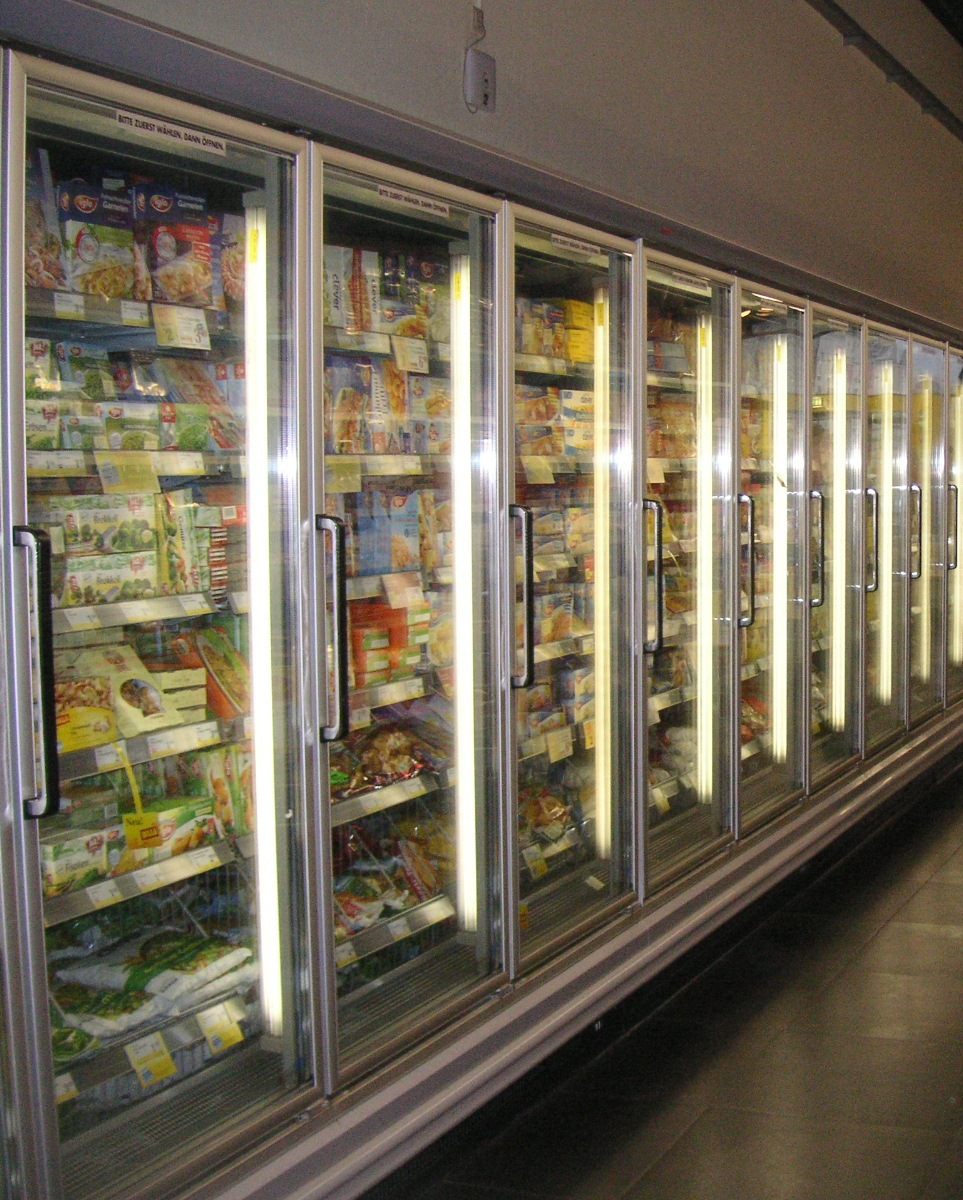
1. Use of low energy refrigeration

• Generous evaporator surfaces

• Specially designed air duct

• Use of energy-saving air circulation fans – consumption per fan: 7-9 W

• Electronic regulation of the panel heaters
billa klosterneuburg supermarket austria


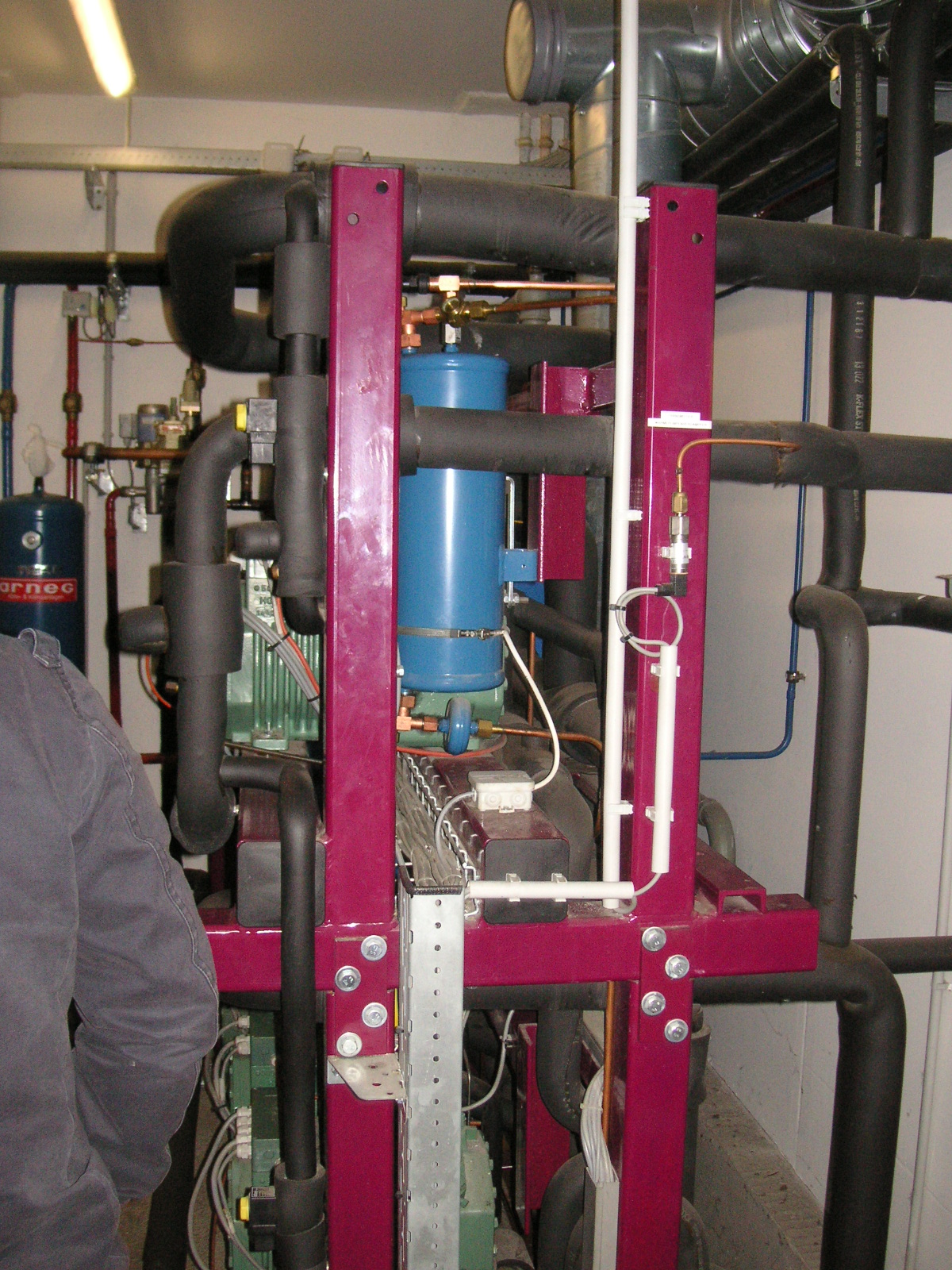
2. Refrigeration systems, condensers and heating systems

• Complete heat recovery from refrigerators is used to heat the supermarket

• Additional heat energy during the cold season can be extracted by the partial use of the refrigeration system as a heat pump

• Special electronic control of the refrigeration systems, reacting to the surrounding temperatures

• Use of special electronic system for cooling and heating system

3. Use of energy saving plant

• Short payback periods (4.5 years)

• Reduction of operational and connection costs

• Constant control of the cooling temperatures

• Extended service life of the compressor by minimizing the frequency of switching

• No building work for heating systems required
billa klosterneuburg supermarket austria billa klosterneuburg supermarket austria


Fact sheet

Sales area: 600 m²

Storage and ancillary area: 200 m²

Year of construction: 2007

Wall construction: Reinforced concrete 20 cm + Rock wool 16 cm + OSB 2.6 cm

U-value External walls: 0,23 W/m²K

U-value Windows: Glass 1,1 W/m²K, Incl. profile: 1.8 W / m² K, Total construction: u = 1.31 W / m² K

Roof construction: 1.8 mm SARNAFIL roof membrane, EPS 20 cm, PAE film LD 920 trapezoidal sheet

U-value Roof: 0,18 W/m²K


Who can participate in GreenBuilding?

• Owners of non-residential buildings; they can become GreenBuilding Partner.

• Businesses from the building sector, contributing to energy efficiency in the non-residential building sector with their products or services; they can become GreenBuilding Endorser.


How to become GreenBuilding Partner

For becoming GreenBuilding Partner, you need to implement energy efficiency measures in your building(s):

• Refurbishment of existing non-residential building(s): primary energy consumption reduced by at least 25% (if economically viable), total or related to the end-use or subsystem, which is being modernised.

• New non-residential building(s): primary energy consumption 25% below building standard (if economically viable) or below the consumption of “conventional” buildings presently constructed.

• Building(s) already renovated or refurbished (after 01.01.2000): primary energy consumption reduced by at least 25% or the building(s) consume 25% less energy than required by the national building standard in force at that time.


There are three steps in becoming a GreenBuilding Partner:

1. Performing an Energy Audit

2. Development and submission of an Action-Plan based on the audit, describing the measures to be performed

3. Reporting about the success of the Action-Plan implementation


Visit the The European GreenBuilding Programme Website for more information.


Isabel Barros
 

Let’s Imitate the Nature – An Introduction to Biomimicry


I became interested in Biomimicry in 2008. The possibilities of developing innovative concepts and products based in Biomimicry is immense. And this does not apply only to the Architecture / Construction fields but to many other areas. The research that is being done in Biomimicry is fascinating and it’s also progressing very quickly. But first lets look at what is Biomimicry.


What is Biomimicry?

Biomimicry (from bios, meaning life, and mimesis, meaning to imitate) is a new discipline that studies nature’s best ideas and then imitates these designs and processes to solve human problems. Studying a leaf to invent a better solar cell is an example.


Biomimicry looks at nature as model, measure, and mentor.


Nature as model: Nature models are studied and then its forms, process, systems, and strategies are emulated to solve human problems.


Nature as measure: After 3.8 billion years of evolution, nature has learned what works and what lasts. Nature as measure is captured in Life’s Principles and is embedded in the evaluate step of the Biomimicry Design Spiral (see image below).


Nature as mentor: What can we learn from the natural world? Biomimicry is a new way of viewing and valuing nature.


The Challenge to Biology Design Spiral – © 2009 Biomimicry Guild

The Biomimicry Guild and its collaborators have developed a practical design tool, called the Biomimicry Design Spiral, for using nature as model.


How does Biomimicry relate with Architecture?

The answer is simple. Biomimicry is a fantastic and under-explored tool for sustainable architectural design. Nature can teach us about forms, processes, systems, and strategies. By learning about how nature manages to solve its problems, great solutions can be explored for our built environment.

Architect Michael Pawlyn has been exploring biomimicry for some time. His book Biomimicry in Architecture demonstrates how biomimicry offers architects a whole new system to design by.

The Eden Project Biomes

The Eden Project Biomes


How can architects build a new sustainable world inspired by biomimicry?

By learning from nature!


Learn more about Biomimicry


Isabel Barros


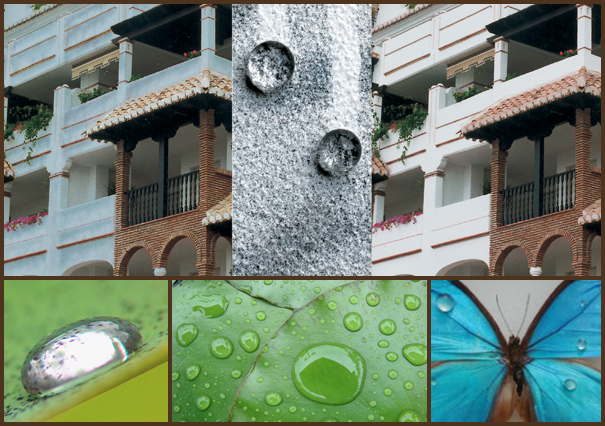
Featured image by STO Corp. Lotusan collage – © The Biomimicry Institute.


Guided Factory Tour at Fronius in Austria

Fronius creates new technologies and solutions for monitoring and controlling energy. They are technological leaders in the field of battery charging systems, welding technology and solar electronics.

This tour was part of the Renewable Energy Research Trip to Austria that took place in November 2011.

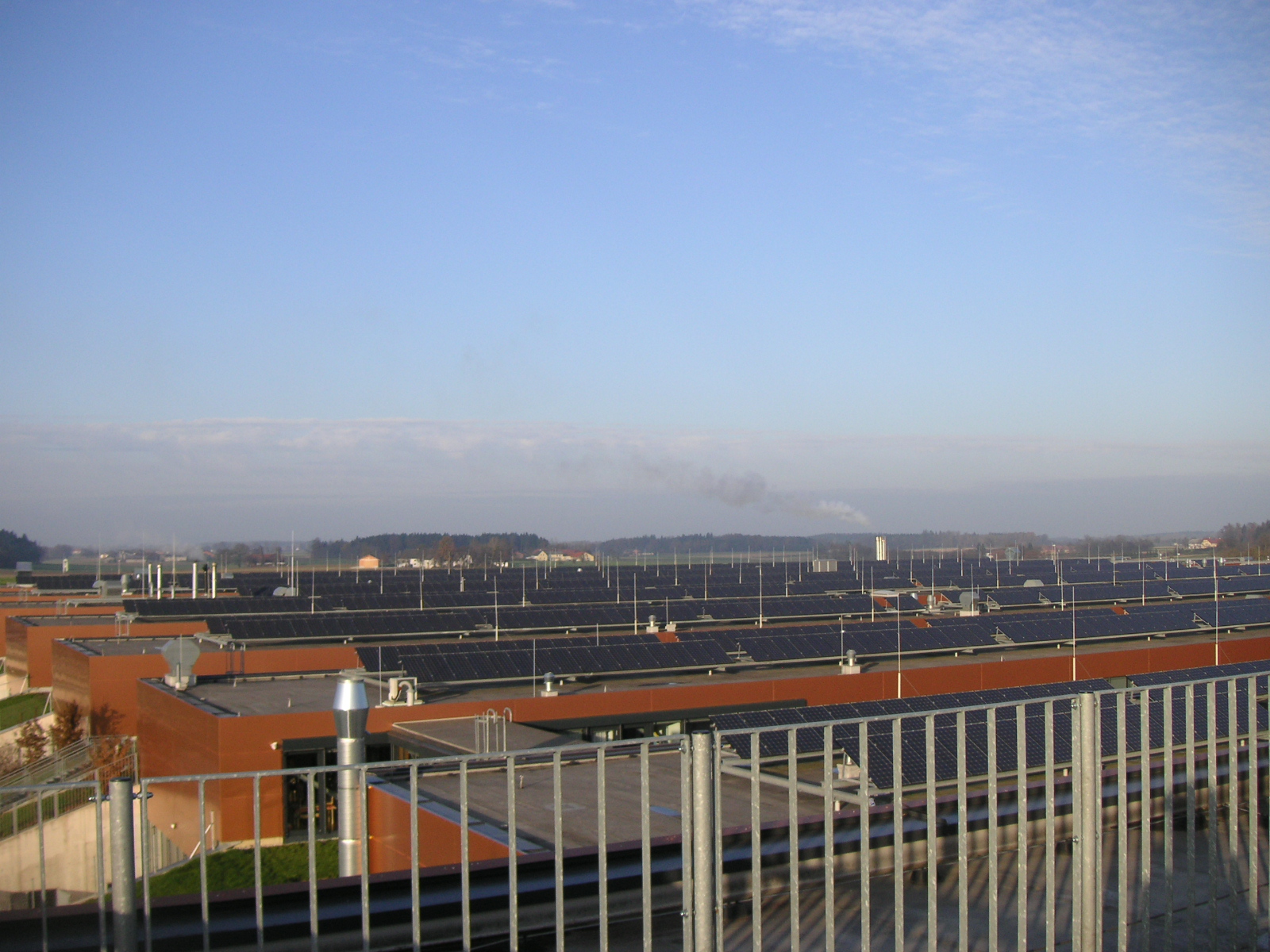
The factory is impressive but unfortunately we weren’t allowed to take photos inside. The 38,000 sq.m. building features an innovative energy concept with one of the largest photovoltaic systems in Austria (615 Kwp/3600 sq.m.), a biomass power station (1500kw) and a geothermal system for heating and cooling.

Fronius Austria Factory Solar PV

Fronius Factory – Roof with solar photovoltaics

[pinterest]

Just the photovoltaic system on its own could cover the annual electricity consumption of 160 households.


Fronius Austria Factory Creche

View to the Fronius “Kinderland” creche

[pinterest]

Added extras, such as the Fronius “Kinderland” creche and staff restaurant, cater for the wellbeing of employees.


I was also very impressed with their HyLOG project.

“HyLOG” stands for Hydrogen powered Logistic System. The ambitious goal of this project is the implementation of an emissions-free and more efficient in-house logistics system in a real industrial application environment – in this case, at the Fronius facility in Sattled, Austria.

Fronius Austria Hydrogen Energy HyLog Project

Fronius HyLog Project

[pinterest]

Instead of batteries, logistical vehicles at the Fronius Sattledt location are operated using environmentally-friendly hydrogen.

The hydrogen used for the HyLOG vehicle is produced by Fronius in-house via an electrolysis process powered by the 615 kW PV system on the roof of the building. The hydrogen is then stored and made available for refueling via an in-house filling station infrastructure. The fuel cell drive integrated into the vehicle is used to convert the hydrogen into energy to operate the vehicle.


1. PV modules. 2. Electrolyser. 3. Hydrogen reservoir. 4. Hydrogen tank. 5. Fuel cell (on-board). 6. Electronic drive unit (on-board). 7. Inverter. 8. Sattledt production facility. 9. HyLOG truck.

[pinterest]

Here’s how it works: The PV modules (1) capture the sunlight and turn it into DC current. Power needed immediately at the Sattledt production facility (8) is made available by way of the electronic inverter module (7). The rest of the electric power is used by the electrolyser (2) to split water into its twin constituents, oxygen and hydrogen. The hydrogen is stored in a reservoir (3), and the oxygen is released into the atmosphere. The HyLOG vehicles are refuelled with this stored hydrogen at a filling station (4). Together, the fuel cell (5) and electronic drive unit (6) integrated in the HyLOG truck (9) turn the hydrogen into motive power. The main benefit of this zero-emission materials-handling solution is that refuelling with hydrogen only takes a few minutes, whereas conventional battery-powered warehouse trucks have to be recharged for 8 to 10 hours every time.


Isabel Barros

« Older posts Newer posts »