As shocking as it could sound it is estimated that one sixth of the world’s population does not have access to clean drinking water.
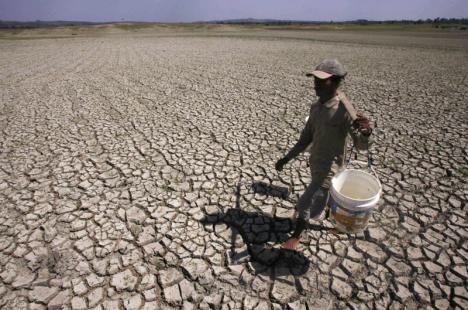
A villager looking for water as he walks in a dried out lake. Photo by Sigit Pamungkas, Reuters.
According to the Irish Times developed cities and regions around the world are beginning to run out of water in advance of the effects of climate change. Many cities, including Dublin, are likely to face severe water demand over the next 20 years. Read more.
These are the key findings of a report published by the European Environment Agency looking at over-use of water across the continent: Europe running out of water.
This should make us all feel more responsible for the water we consume and take all the necessary measures to save as much water as possible.
What is Rainwater Harvesting?
Rainwater harvesting is the collection, filtering, storage and use of rainwater. This water is used in non-potable applications, such as:
- WC and urinal flushing
- irrigation and landscape watering
- garden watering
- vehicle washing
- domestic laundry
The rainwater harvesting has re-gained its importance as a valuable option or an additional water resource.
There are a number of types of systems to harvest rainwater ranging from very simple to more complex and more efficient systems. Generally, rainwater is either harvested from the ground or from a roof.
The three basic types of rainwater harvesting system available:
- Gravity (non-pressurised): Collected rainwater is pumped from the main holding tank to an elevated header / break tank. The connected appliances are then supplied from the header / break tank as in a normal Gravity fed system.
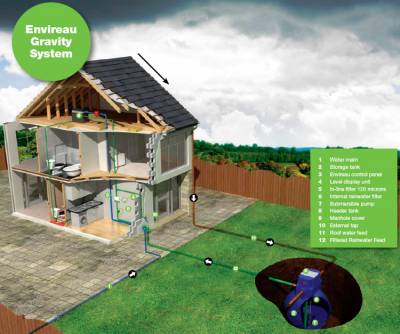

Gravity system by KingspanWater.
- Direct (pressurised): Collected rainwater is pump fed direct from the main holding tank to the serviced appliances.

Direct domestic system by RainHarvesting Ireland.
- Combination: Collected rainwater is pump or gravity fed to a low level break tank. In turn, the water is then gravity fed to an integral or external booster pump system for onward distribution to the serviced appliances.
RainHarvesting Ireland and KingspanWater are currently leading designers and suppliers of sustainable water solutions in Ireland.
Click to view Kingspan’s guide that provides an overview of the key points within BS 8515:2009 -Rainwater harvesting systems – Code of practice.
Posted by Isabel Barros
 View Isabel Barros’s profile




























Excellent post and what better place than Ireland to put a barrel under the rain gutters!
Se trata de un excelente article.Thank usted para compartir!@
This s the most useful article that i’ve found for this topic. I want to build my own rainwater system too. Thank you for this post!
Great insights,we are not aware for the things that rainwater can give us.And from these we must learn that we shall look for strategy where we can help to re use rain water.
It’s so sad to see the soil suffering drought.Summer is coming and we should be prepared for any instances that might happen,like El NiÑo.
It’s really the situation on some places and this is why we should be responsible in water conservation even we have access to clean drinking water.Luckily yes,we are but responsibility is still there.
It is a practical way to collect rainwater and use it for other purposes. Where having a hard time now because of the climate change.
You put the all great things which makes all people getting interested. but yes that is right, i agree. all you mention is make a sense. Thanks
I have not any word to appreciate this post.Really i am impressed from this post. Thanks.:)