design + energy + excellence

Category: Construction (Page 6 of 14)

100-Year-Old Chimney Breasts


Accurate conservation of a building requires historical research. When we work with old buildings we often have to study the construction methods used many years ago so we can propose and develop an appropriate approach.

Intervention in old buildings must be based on knowledge of the works and techniques of the past. Old books and/or illustrations are one of the sources regularly used to understand historic buildings and devise appropriate intervention.
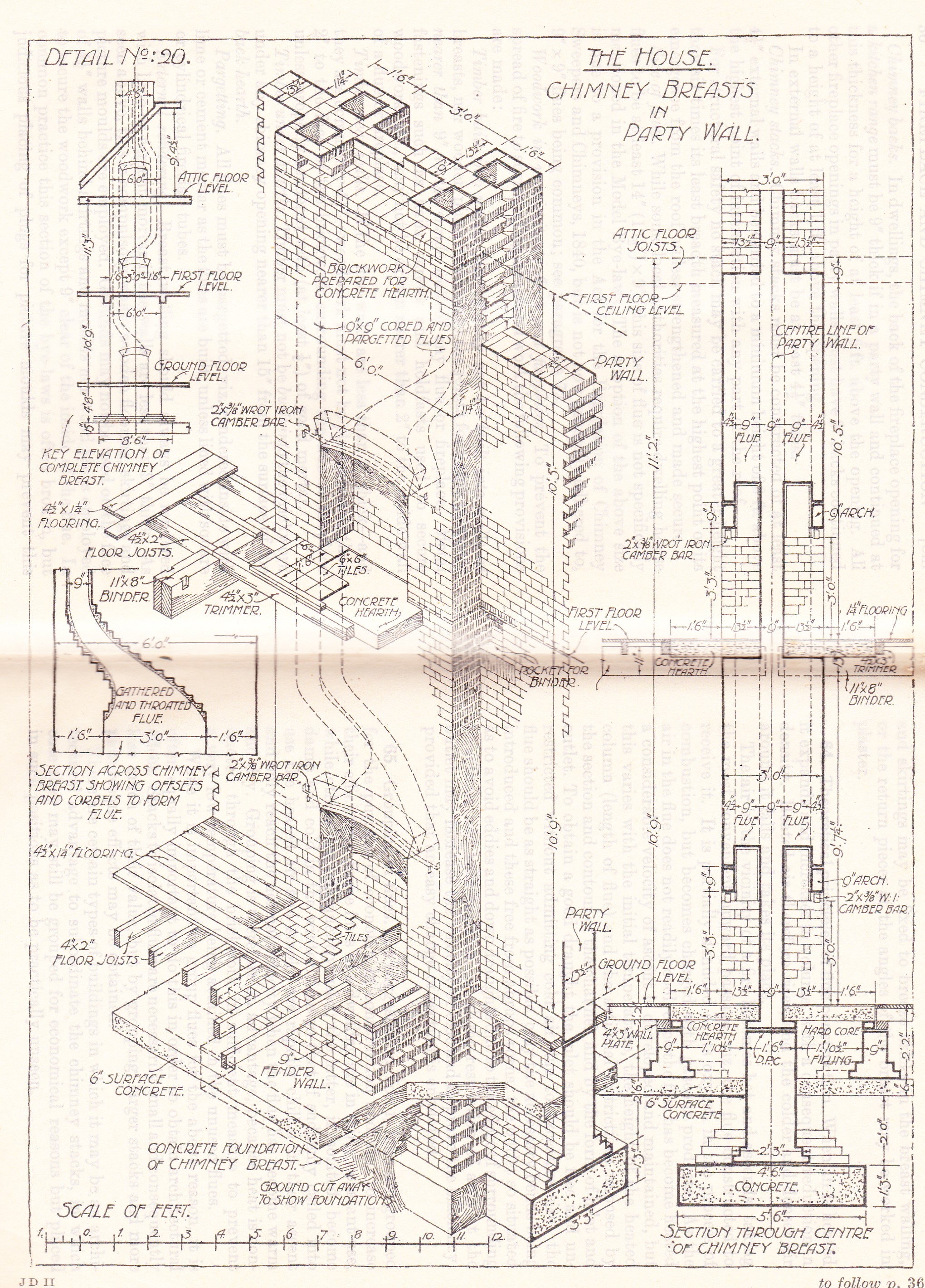
Chimney breasts in Party Walls 1916 Jaggard and Drury

Chimney breasts in party walls by Walter R. Jaggard and Francis E. Drury, Architectural Building Construction – Vol. II – Cambridge University Press


Here we share with you a beautiful illustration from Vol. 2 of the Architectural Building Construction book by Walter R. Jaggard and Francis E. Drury. with a 1st Edition dated from 1923. The authors illustrate in Detail no. 20 of their book the construction of chimney breasts in party walls. The illustration is beautifully hand drawn and is self explanatory. However, we highlight some of the text that accompanies it:

Jambs – Jambs to the sides of fireplace openings may project to any required distance but must be at least 9” wide, and, if the projection be more than 4 1/2” and the width less than 13 1/2”, the jambs must be tied by a caulked chimney bar of wrought iron (or steel) where an arch is employed to support the breast walling above.

Thickness of flue walls – The brickwork surrounding a flue, in jambs, breasts and stack, must be at least 4 1/2” thick.

Size of flues – While some local authorities require dwelling house flues to be at least 14” (13 1/2”) x 9”, this size of flue is not specifically mentioned in the Model Bye-laws. The adoption of the above size is due to a provision in the Act for the Regulation of Chimney Sweepers and Chimneys, 1840, but it is now generally adhered to, 9” x 9” flues being common.

Pargetting – All flues must be pargetted, viz. rendered inside with lime or cement mortar as the flues are built, unless lined with square or cylindrical fireclay tubes.


Isabel Barros is a RIAI Architect Accredited in Conservation at Grade 3. Please contact office@isabelbarrosarchitects.ie if you need assistance with your Conservation project.

Old Buildings: Why Things Go Wrong


Old buildings do not behave like new ones. Taking proper care of them requires skills that most owners (and contractors) do not have.

When things go wrong with an old building it is most often associated with:

  1. Improper repairs;
  2. Lack of maintenance;
  3. Lack of understanding of how the building works.


There are a number of interventions that can have an adverse effect in old buildings. Typical examples are:

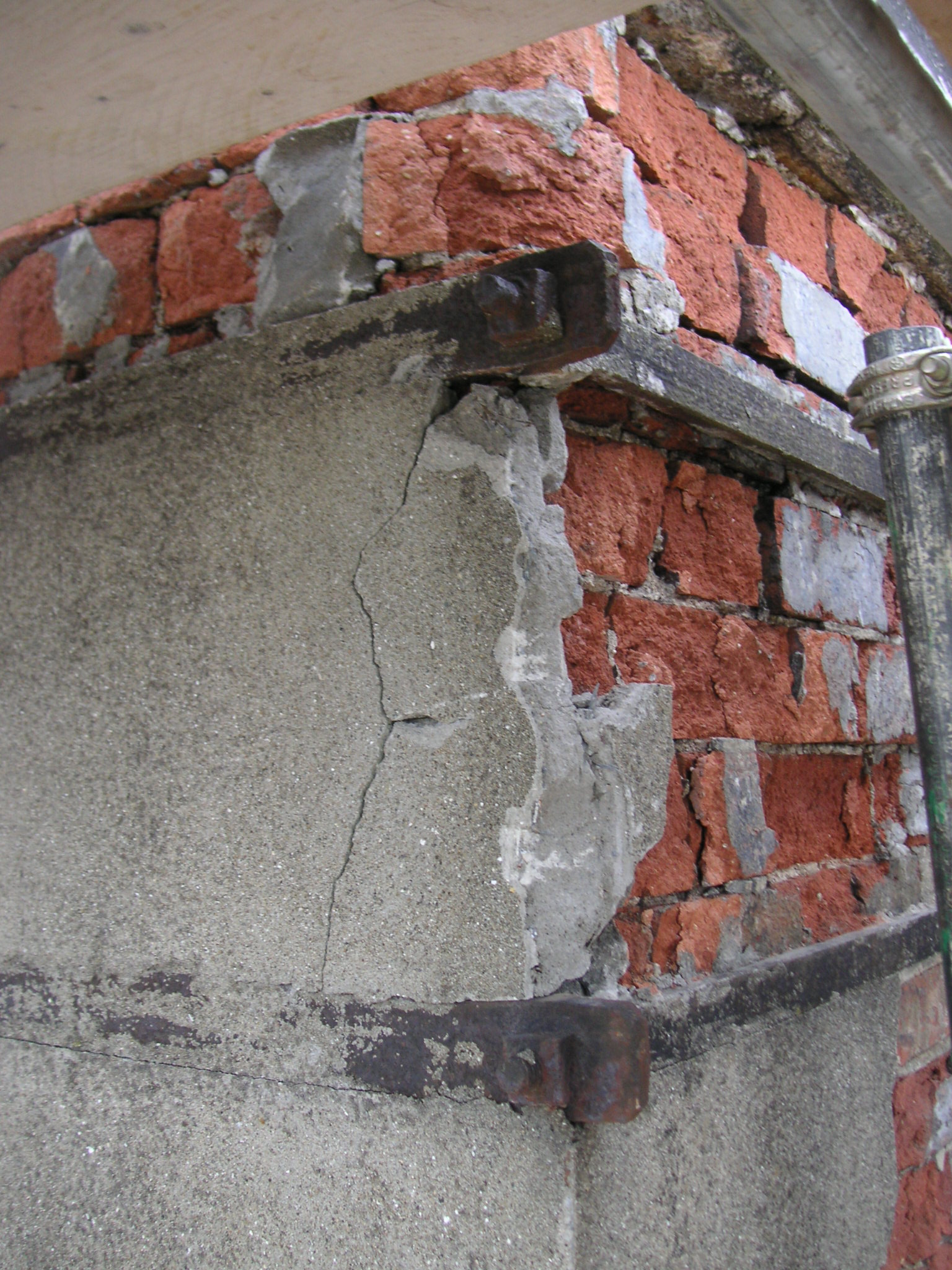
  • External or internal cement rendering.
  • Cement pointing.
  • Introduction of heating at too high temperatures.
  • Impermeable plastic paints.
  • Waterproof coatings.
  • Sealing up disused chimneys.


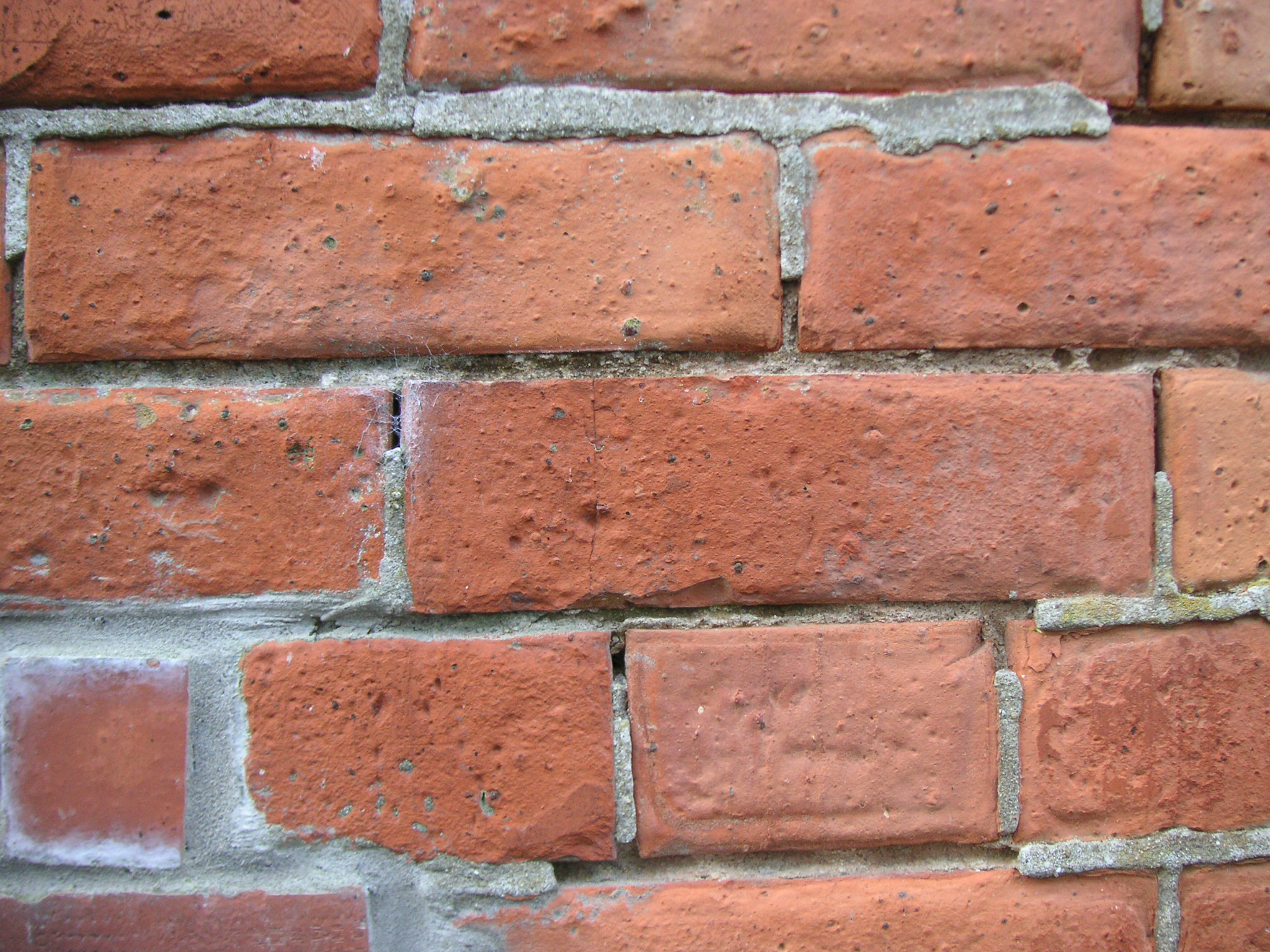
Brick damaged by cement render at Brandon House Hotel

Brick damaged by cement render at Brandon House Hotel


Improper cement pointing in brickwork, Wexford town Post Office

Brickwork with improper cement pointing at Wexford town Post Office


Improper cement pointing in brickwork, Wexford town Post Office

Lime pointing well visible behind this improper cement pointing at Wexford town Post Office


Bricks in Wexford town 20150128 (74)

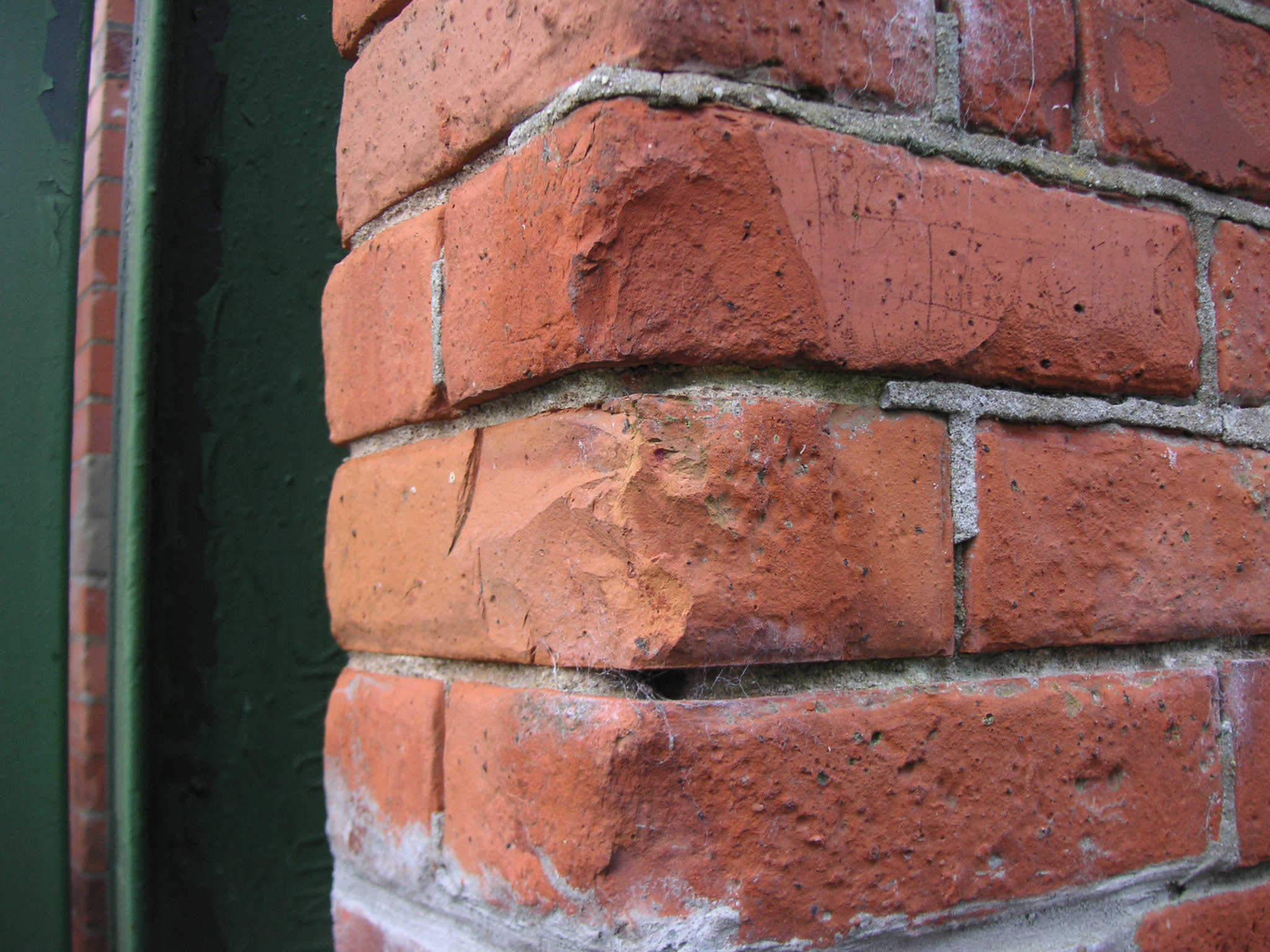
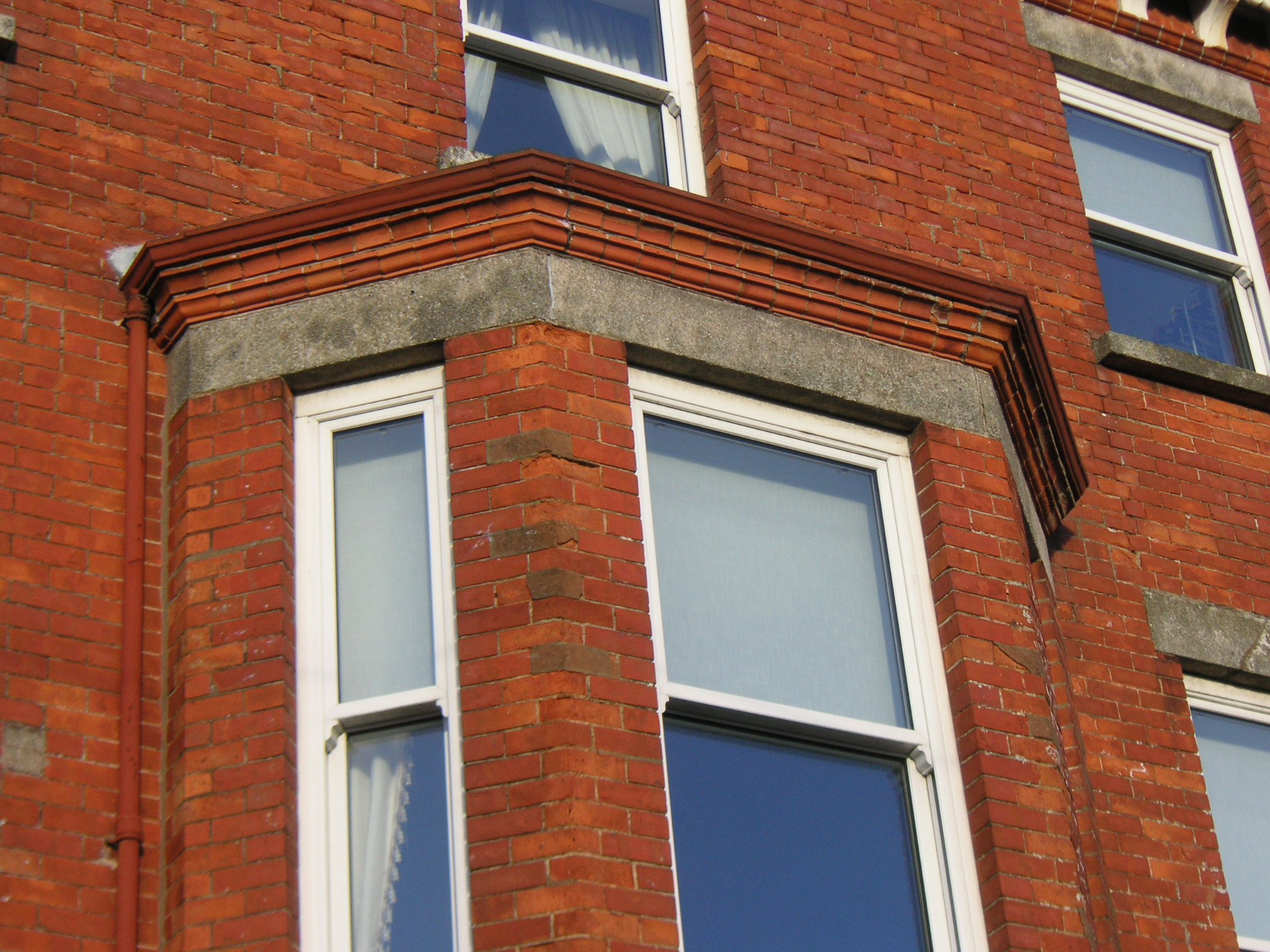
Spalling of brick and inadequate cement repairs at Spawell Road, Wexford. Luckily the brick cornice survives!


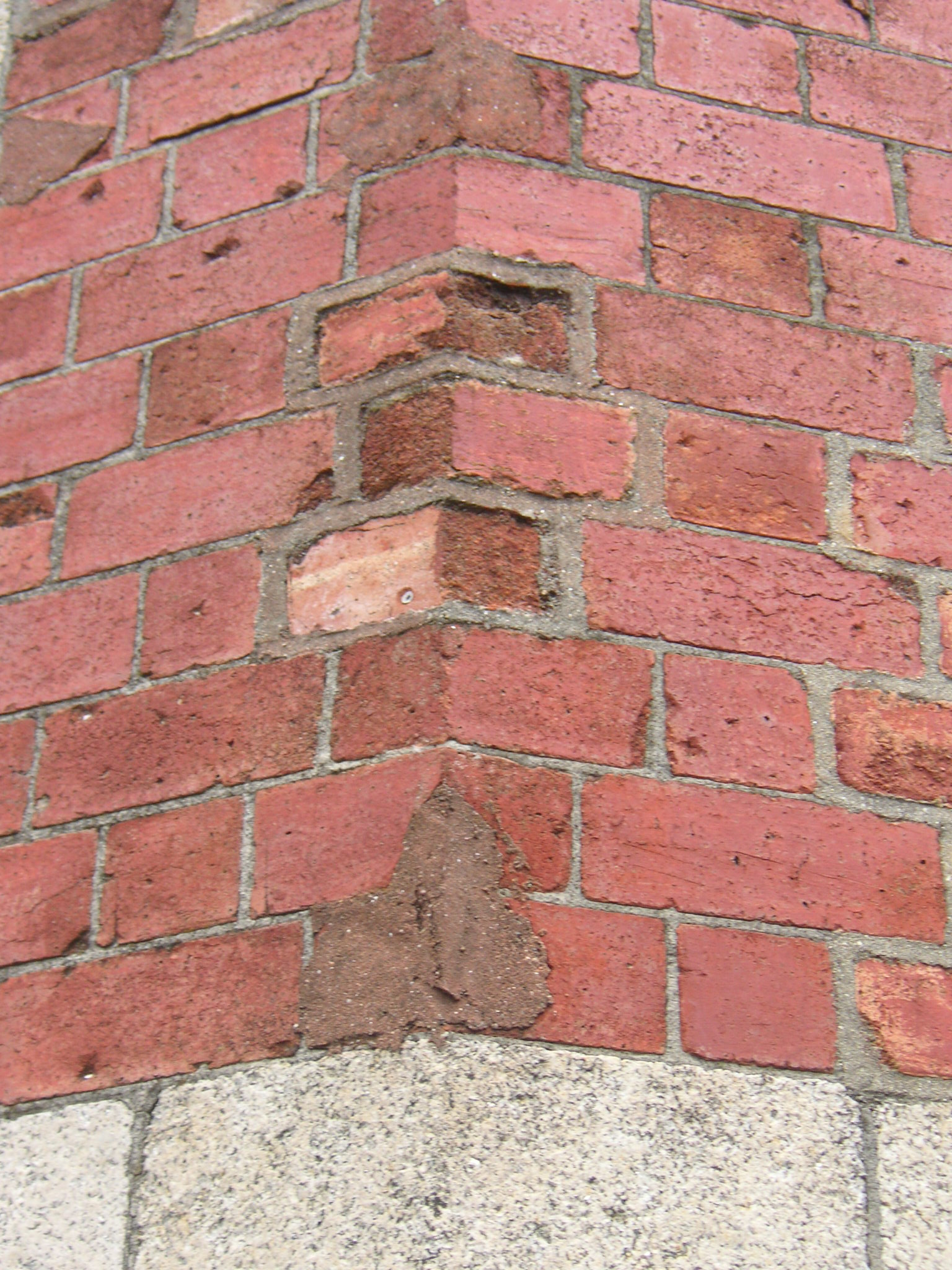
Inadequate cement repairs at Brandon House Hotel

Inadequate cement repairs at Brandon House Hotel, New Ross


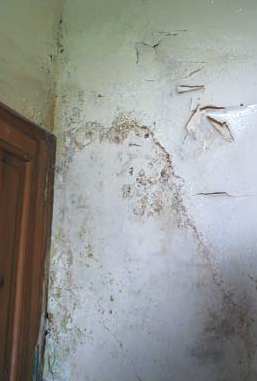
Non permeable paint

Blistering and peeling of a non-permeable paint. Image courtesy of Historic Scotland.

 

A fine example of lime pointing at Kilmainham Court, Dublin

A fine example of lime mortar pointing at Kilmainham Court, Dublin


A fine example of lime pointing at Brandon House Hotel, New Ross

A fine example of lime mortar pointing at Brandon House Hotel, New Ross


There is little point in covering up problems if you do not find the source of them and repair the real problem.

It is important to know when specialist advice is needed. It is a false economy not to get the best advice before having work carried out. Bad repair works can be difficult and expensive to undo. They can damage a building in the long-term and devalue your property.

Isabel Barros is a RIAI Architect Accredited in Conservation at Grade 3.


Invisible Business


There are mainly 3 methods for fixing timber cladding: secret fixing, face fixing and invisible (or concealed) fixing.

In this article we look at some options for Invisible Fixing Timber Cladding. This is the less used method, the least available and likely to be the most expensive. This method is mostly used for open joint timber cladding when a face fixing is not desirable for aesthetics reasons or where cladding boards are prefinished with a film forming coating and there is a preference for not penetrating that film.


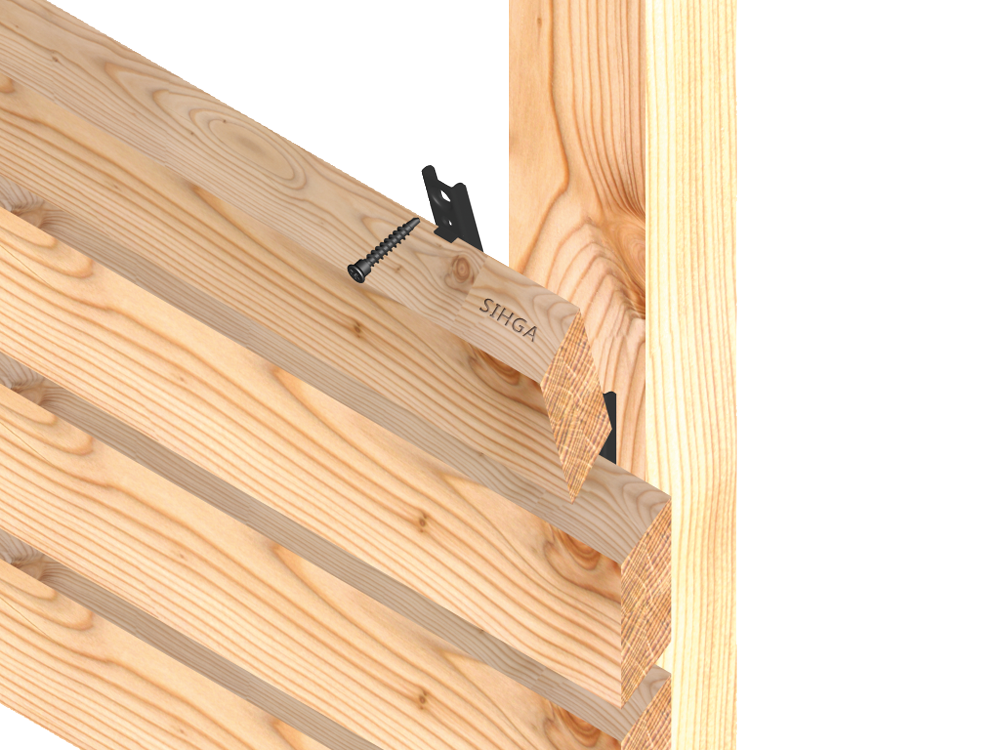
FassadenClip

FassadenClip-FCS_99014 FassadenClip-FCS_99014_AW-F1

These clips are manufactured in Austria by SIHGA. Russwood in UK can supply them to Ireland.

Below is an animation showing how these clips are assembled.


TIGA

P-Tiga-Fixinggroup


These clips are manufactured in Austria by the FixingGroup. The boards need to be grooved to receive the clip.


ClipJuAn

clipJuan

This is actually a deck clip but can also be used for façades. The boards need to be profiled to receive the clip. There are only 4 machines in Europe that are able to profile the timber for this fixing system.

These clips are manufactured in France by Architecture du Bois – Terrasses grad™.

Below is an animation showing how these clips are assembled.


« Older posts Newer posts »