In Ireland the Royal Institute of the Architects of Ireland -RIAI requires to its members a minimum of 40 hours of CPD activity in the course of each year.
CPD, or Continuing Professional Development, is the term used to describe lifelong learning or continuing education as it relates to those active in the professions. There have been several attempts to define the concept, but this one has wide application:
‘The systematic maintenance, improvement and broadening of knowledge and skill and the development of personal qualities necessary for the execution of professional and technical duties throughout the practitioner’s working life‘.

What exactly do RIAI Architects need to do?
The RIAI requires the following minimum level of CPD involvement.
1) In the course of each year, each registrant/member must accumulate a total of 40 hours of CPD activity, divided as follows:
a. 20 hours Structured CPD
b. 20 hours Unstructured CPD
Professionals have a duty to ensure that they are capable of providing the services they offer. Within the context of RIAI CPD Requirements it is the responsibility of each registrant/member to judge the best approach to undertaking the CPD activity necessary to;
a. maintain compliance with the relevant Standard of Knowledge, Skill and Competence , and
b. acquire and maintain the skills appropriate to their current activities and chosen career path.
What happens if a RIAI Architect cannot fulfill his/hers CPD obligation?
A registrant/member whose CPD record is “Incomplete” at the end of the CPD cycle will be asked to provide an explanation for non-compliance. Unless there is good reason the matter will be referred to the Professional Conduct Committee. Sanctions open to the Processional Conduct Committee include censure, fines, suspension, conditions for continued registration, and removal from the register.
Why should clients care?
When you are hiring a RIAI Architect you are hiring a professional that must take all reasonable steps to maintain an appropriate level of professional skills on an ongoing basis. CPD is the process of regularly assessing current and future skill and knowledge requirements relevant to the Architect’s responsibilities.
Recently, we were disappointed with the fact that a particular professional (not a RIAI member) was not familiar with a recent (very important) change in the Irish regulations. We do not think a RIAI member would lack this important information and we, RIAI members, certainly have to thank the Institute for supporting us and promoting the performance and the reputation of the profession. RIAI has developed one of the most demanding CPD requirements we know and this can only mean that high standards are at the forefront of their policies.
We just wish a similar system would be implemented for builders and tradespeople! It protects the consumer and the public interest, and increases effectiveness of construction practices.
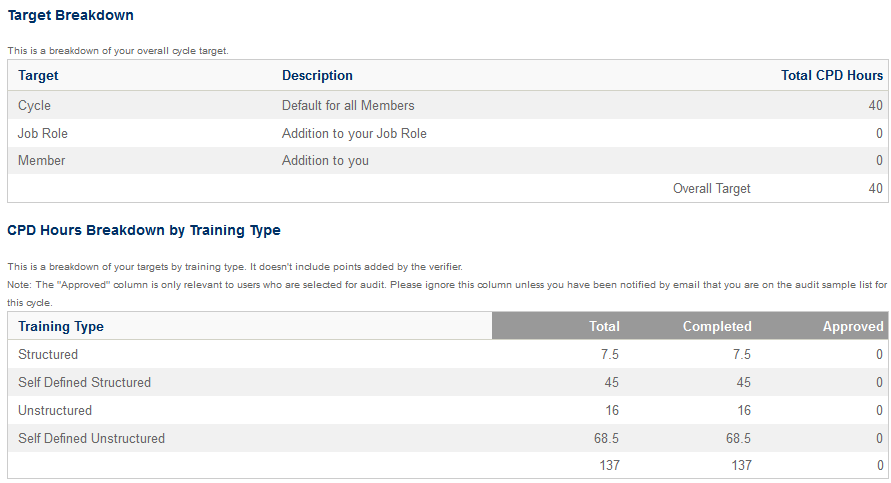
CPD Summary Isabel Barros 1 Oct 2011 – 30 Sept 2012