design + energy + excellence

Tag: construction (Page 6 of 12)

Building Costs in Ireland 2014

Every year we share useful information to guide you on the costs for your construction project in Ireland. This will help you to estimate an approximate figure for your building costs.

You can check our other articles in this series here.

The Irish construction industry is slowly recovering. Predictions mention an 8% increase in value of output during 2014.

The Society of Chartered Surveyors Ireland  reported that Tender Prices have bottomed out and have begun to increase due to a rise in input costs and commodity prices (oil etc). SCSI also reported that Construction tender prices grew by 2.2% in the second half of 2013, up from 0.9% in the first half of the year. The annual increase for 2013 was 3.1% and there is an increasing awareness amongst contractors and sub-contractors of the true cost of carrying out work and a reluctance to price below this, which ensures that projects are priced at viable levels.


Average Irish Construction Prices 2014

The average construction costs table is generated using Bruce Shaw’s Cost Database and sets out typical building construction costs.

(Click image to enlarge)

Bruce Shaw average construction prices_2014


The building costs of 2013 are still a good starting point for your project.

Turner & Townsend‘s annual construction cost survey provides a comprehensive and detailed overview of construction costs in Ireland, in 2013.

(Click image to enlarge)
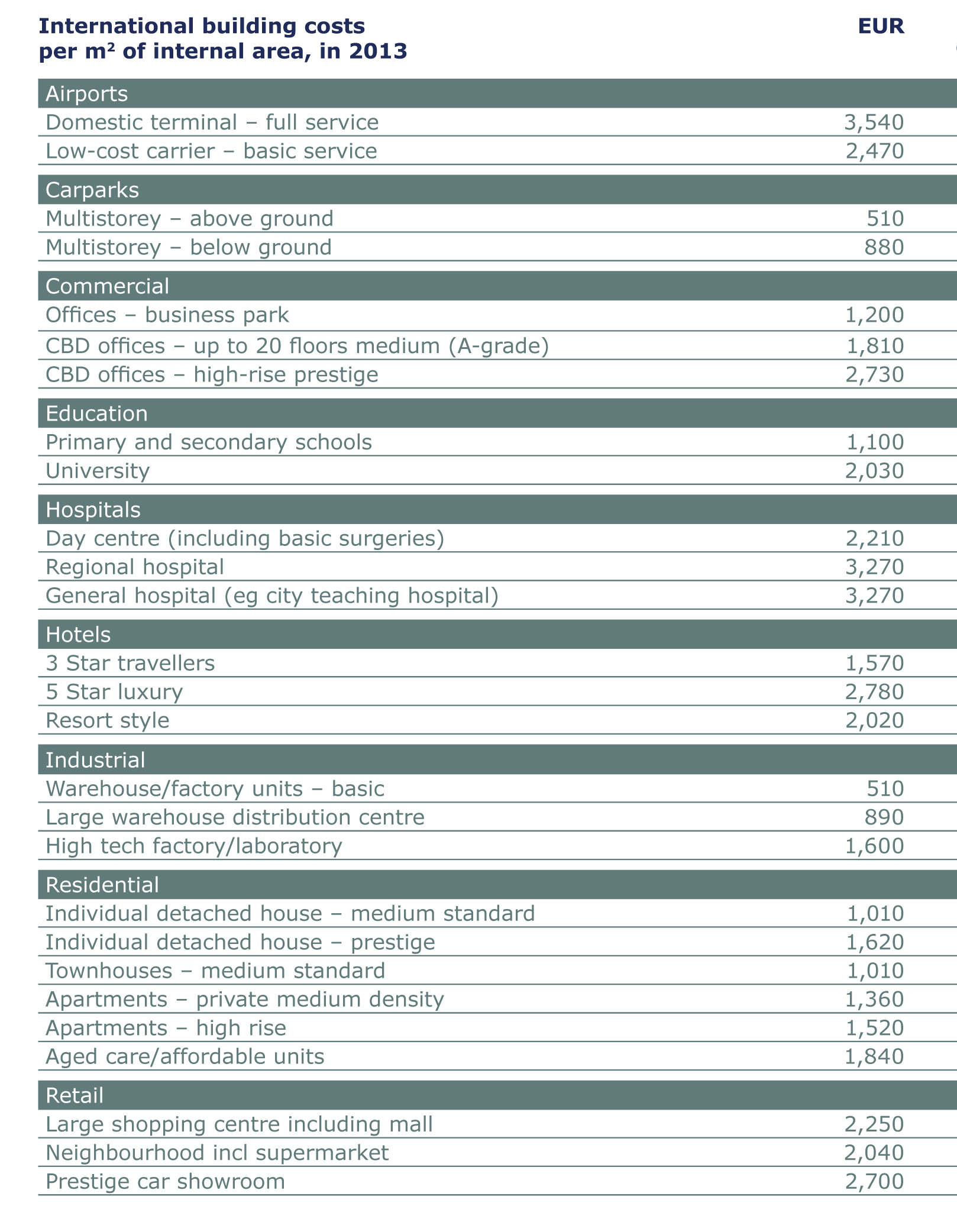
Turner and townsend_Ireland_construction_cost_survey_2013_Price sqm


Labour rates and Construction Materials Prices

Turner & Townsend‘s annual construction cost survey provides labour costs and also the prices for some materials. Note the cost escalation forecast of 2%.

(Click image to enlarge)

Turner and townsend_Ireland_building_cost_survey_2013_Labour Material Etc

In June 2014 CSO recorded that all building and construction materials prices increased by 1.3% in the year since June 2013.

The most notable yearly changes were increases in Sand and gravel (+33.6%), Hardwood (+14.5%) and Stone (+5.7%), while there were decreases in Fabricated metal (-3.4%), Other Structural steel (-1.8%) and Reinforcing metal (-1.5%).


Guide to Rebuilding Costs in Ireland

The Society of Chartered Surveyors publishes every year a guide to rebuilding costs in Ireland. This guide is intended to assist in insuring a house and the costs included are based on building rates as of March 2014.

(Click image to enlarge)
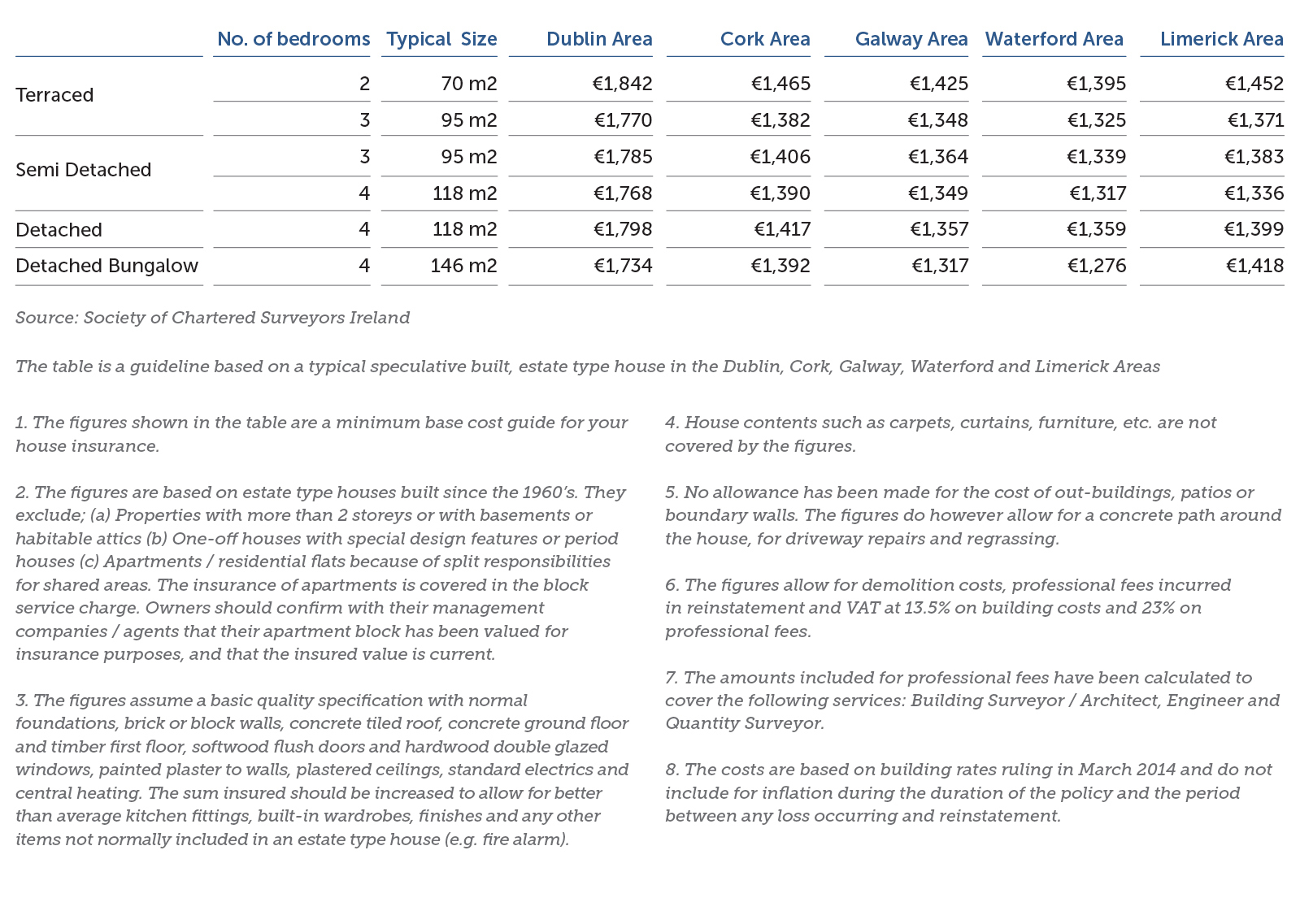
SCSI House Rebuilding Costs per sqm_2014

SCSI also provides a House Rebuilding Cost Calculator here, and a Home Renovation Incentive Scheme Calculator here. You can read more about this Incentive Scheme here.


Other Resources

Paul McNally Ecological Architecture in Cork has developed a very detailed and user friendly cost estimator for new build houses. Grab all the information you can and get your estimate here.
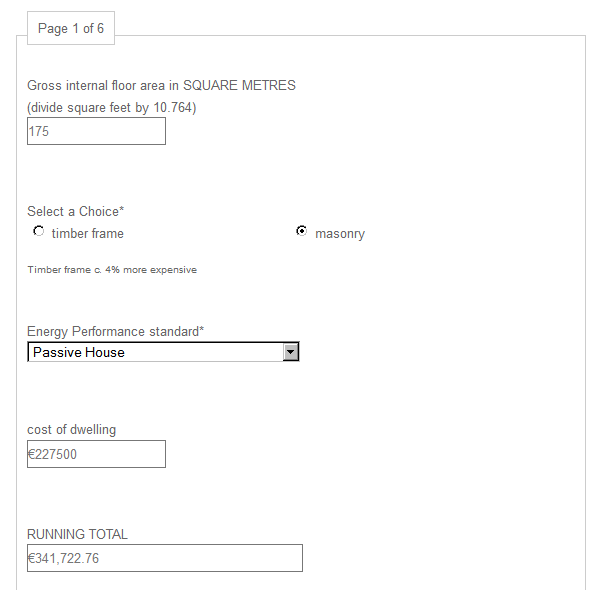
New_Build_House_Budget_estimator_Paul_McNally_Ecological_Architecture_MRIAI_-_2014-07-29_22.11.43


Typical Exclusions

There are a number of other expenses that you should also consider when estimating your project. See some of the exclusions that may apply to your project here.

Additionally, with the newly amended Building Control Regulations, you are also likely to need to allow for:

  • Assigned Certifier fees


Check out our other articles in this series



The Secret Guide to Deal with Architects – Take 6


Our 6th secret tip about how to deal with an Architect focus on relationship building as an important pillar for collaborative work.

If you have just landed here do not miss our previous tips:


6. Build Trust

Build a relationship with your Architect based on trust and credibility. Your Architect’s duty is to always act in your best interest. An Architect has the most appropriate training and experience to design, co-ordinate and manage your building project, and you need to believe this!

An Architect that feels trusted by a client will definitely go an extra mile and you may even get some freebies along the way (most likely extra time not charged and extra care and passion for your project).

Take 6

Hot tip: Become a friend rather than just a client. Open your heart and share your interests with your Architect (even if they are as simple as liking giraffes!), you may find out that your Architect has similar interests and what best way to start a relationship where teamwork is so important!


Go to Take 7 – Enjoy the Process


Start from Take 1 – Stages


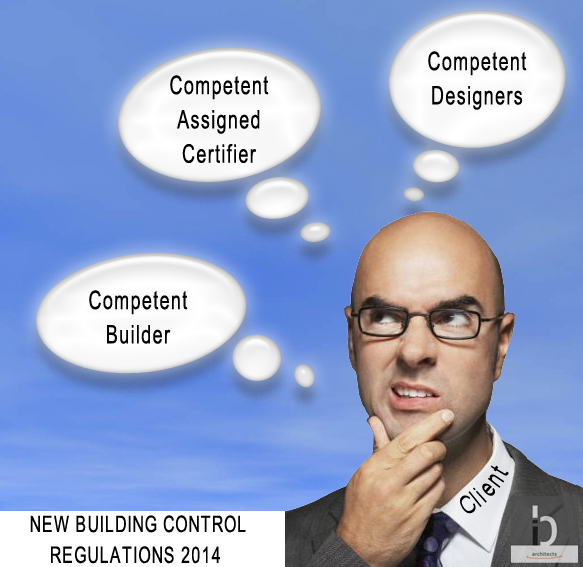
Clients’ Responsibilities Under the New Building Control Regulations 2014

The newly amended Building Control Regulations will come into operation on 1 March 2014.

These new Regulations will introduce strict new measures for the control of building projects with a view to prevent the future re-occurrence of poorly constructed dwellings.

Building Control Regulations 2014_Clients responsibilities


In summary, the new Building Control Amendment Regulations require:

  • Submission of compliance drawings and documentation to local building control authorities;
  • Signing of mandatory certificates of compliance by the designer prior to construction and by the Assigned Certifier and the Builder when a building is complete.


There is a lot more paperwork, inspection, certification, control and responsibilities than before. Clients shall be prepared to incur additional expenses to cover the above services (read BREGs Forum article with indicative costs).


All duty holders (clients, designers, contractors, etc) will have their own obligations. This article focus on the Clients' Responsibilities.


These responsibilities will only apply to you if you are undertaking the following works:
  • the design and construction of a new dwelling,
  • an extension to a dwelling involving a total floor area greater than 40 square metres,
  • works to which Part III applies (works where a fire safety certificate is required).


Key Responsibility

There is an obligation under section 3(5) of the Building Control Act 1990 that buildings and building works are designed and constructed in accordance with the relevant requirements of the Building Regulations. Building Owners, Designers and Builders must adhere to this legal requirement. In undertaking building works, appropriate measures shall be taken so that the work is in accordance with the Building Regulations. Designers, Builders and certifiers should exercise reasonable skill, care and diligence in the exercise of their duties. They and persons assigned by them should be competent for the work they undertake.


Clients' Responsibilities

The Client/Building owner is ultimately responsible for ensuring that buildings and building works are carried out in accordance with the requirements of the Building Regulations.

The Clients/Building owners should ensure:

The above will ensure that adequate resources and Competent Persons are made available to design, construct, certify and inspect the building works.


Link to New Building Control Amendment Regulations 2014

Assigned Certifier

The Assigned Certifier is the person assigned by the Client/Building Owner as is required under the Building Control Regulations. They undertake to inspect, and to co-ordinate the inspection activity of others during construction, and to certify the building or works on completion. The role of Assigned Certifier does not include responsibility for the supervision of any builder. They may or may not be a member of the design team.


Competent Person

A person is deemed to be a competent person where, having regard to the task he or she is required to perform and taking account of the size and/or complexity of the project, the person possesses sufficient training, experience and knowledge appropriate to the nature of the work to be undertaken;


Who can sign as the Design Certifier and/or as the Assigned Certifier?

The following may be appointed and sign as the Assigned Certifier, provided they are competent in relation to the particular works involved:


« Older posts Newer posts »